
Alopecia Areata: Early Symptoms, Causes, and Why It’s Not Just Stress
Key Points
- ① Explaining self-check methods to detect early-stage circular hair loss.
This section clearly illustrates circular or oval bald patches on the scalp and the characteristic pattern of hair loss, detailing self-check methods that aid in early detection. - ② Mechanisms of Hair Loss Involving Multiple Factors Such as Stress, Lifestyle Habits, and Immune Responses.
This section examines what stress situations and physical changes trigger alopecia areata, organizing the relationship with the immune system from a specialist's perspective. - ③ Presentation of a recovery plan combining medical treatment and daily care.
This plan comprehensively outlines both physician-guided treatments such as topical immunotherapy and steroid injections, as well as self-care measures including sleep management, nutrition, and scalp care.
Recently, we’ve seen an increase in patients consulting our clinic about what may be early symptoms of alopecia areata.
Many people seem to believe temporary stress is the cause of alopecia areata.
However, various underlying causes are actually considered for alopecia areata.
This time, we’ll introduce the symptoms commonly seen in the early stages of alopecia areata, its causes, its relationship with stress, and treatment methods for early recovery at the hospital.
- What is Alopecia Areata?
- Is Alopecia areata becoming more common in women lately?
- Types of Alopecia Areata
- Single-shot type
- Multiple-type
- Meandering-type
- Full-head-type
- Generalized-type
- What is the Process from the Initial stage to the Recovery phase of Alopecia Areata?
- What are the initial symptoms?
- In progress
- Recovery phase
- Is Stress the Cause of Alopecia Areata?
- Autoimmune disease
- Disruption of the hair growth cycle
- Atopic predisposition
- Virus infection
- Genetics
- Psychological stress
- Decrease in female hormone levels after childbirth
- Vitiligo
- SLE (Systemic Lupus Erythematosus)
- Treatment Methods for Quickly Healing Alopecia Areata at Hospitals
- Prevention Methods for Alopecia Areata
- Eliminate the cause of stress
- Exercise to improve blood circulation
- Use a mild shampoo
- Scalp massage to promote blood circulation
- Treatment for Alopecia Areata is Available at Clinics Specializing AGA.
What is Alopecia Areata?
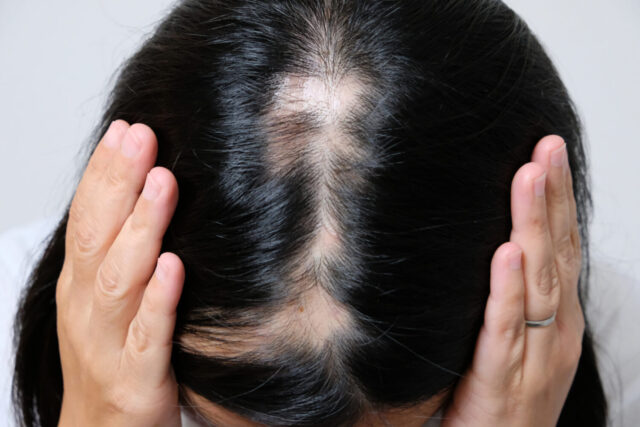
Alopecia areata is a condition where circular or oval patches of hair loss appear on the scalp.
It is commonly referred to as “10-yen baldness” because the patches are generally thought to be about the size of a 10-yen coin.
While some cases involve 10-yen coin-sized patches, severe symptoms can include hair loss spreading across the entire scalp or complete loss of all body hair.
Hair loss exceeding 25% of the total scalp area is diagnosed as severe.
Common causes of thinning hair are explained in the following article.
Is Alopecia areata becoming more common in women lately?
Recently, our clinic has seen an increase in consultations and visits from young women in their 20s and 30s troubled by alopecia areata.
Women tend to experience hormonal imbalances more frequently depending on their life stage.
Since female hormones play a significant role in hair growth, sudden hormonal changes often have a major impact on hair loss.
Types of Alopecia Areata
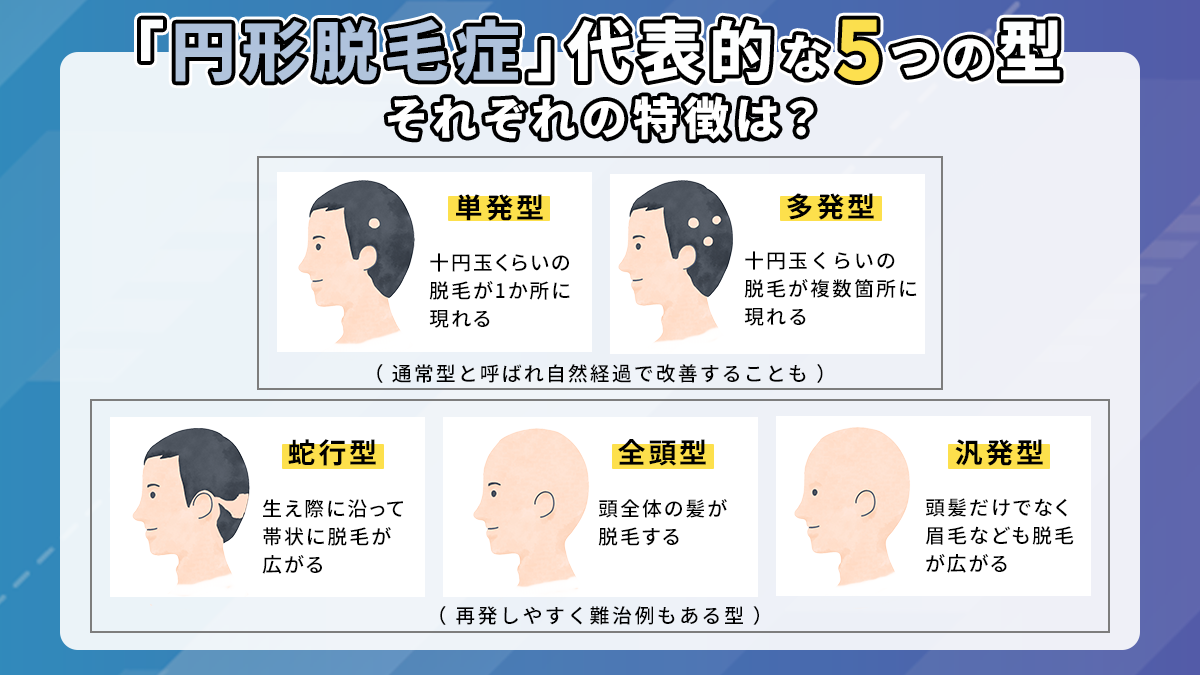
Alopecia areata is primarily classified into the following five types based on the extent of thinning hair and the affected areas.
- Single-shot type
- Multiple-type
- Meandering-type
- Full-head-type
- Generalized-type
Among the above types, both the single-spot and multiple-spot types are sometimes collectively referred to as the typical type.
The typical type can be expected to heal naturally.
Types other than the typical type are prone to recurrence, and many cases are difficult to treat.
Let’s introduce the characteristics of hair thinning in the five types of alopecia areata mentioned above.
Single-shot type
In the single-spot type, thinning hair appears in one area of the scalp, roughly the size of a ten-yen coin.
In the early stages, the area of thinning is small, so you may not notice it until someone else points it out.
The single-spot type is the most common form of alopecia areata.
Even with the single-spot type, if the area of hair loss expands, it is advisable to seek treatment.
Multiple-type
In the multiple-type, two or more circular patches of hair loss, about the size of a ten-yen coin, appear on the head.
This is the second most common type of alopecia areata after the single-spot type.
If you have progressed from the single-spot type to the multiple-spot type, seek medical attention promptly.
Types other than the typical form tend to recur easily and often present as difficult-to-treat cases.
Meandering-type
In the meandering-type, hair loss occurs in a band-like pattern starting from the hairline at the back or sides of the head.
This pattern is called serpentine because the balding areas resemble a snake winding its way.
The hair loss symptoms often appear symmetrically on both sides.
It is commonly seen in children and is generally considered difficult to treat.
Meandering-type alopecia can develop when single or multiple patches of alopecia areata worsen.
Full-head-type
Full-head-type refers to the condition where hair is lost from the entire scalp.
It is commonly seen in young women.
When hair loss progresses to total alopecia, treatment may take a long time in some cases.
Generalized-type
Alopecia progresses beyond the scalp.
A characteristic of the generalized-type is hair loss in areas such as the eyebrows and underarms.
Similar to the total alopecia type, treatment takes time.
What is the Process from the Initial stage to the Recovery phase of Alopecia Areata?
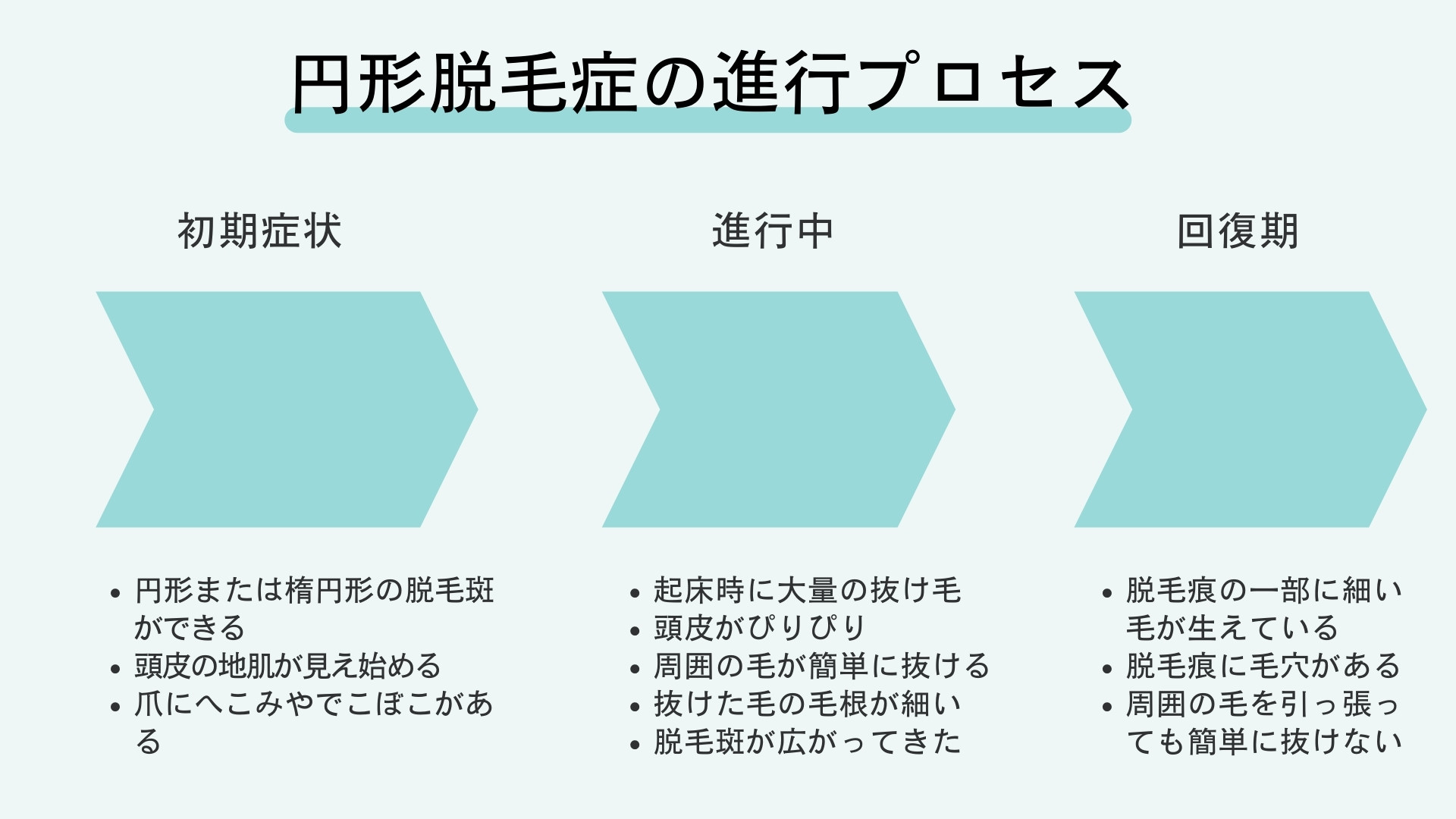
Alopecia areata often progresses with symptoms like the following.
Use this information to self-check your symptoms.
The speed at which symptoms progress from the initial stage varies significantly from person to person.
Some people experience gradual hair loss at a pace where they might think, “Has my hair been falling out more lately?”
Many people develop only one round patch of hair loss, which then stops spreading and often heals naturally.
If you notice significant hair loss or advancing symptoms, be sure to consult a medical professional.
What are the initial symptoms?
The following are typical early symptoms of alopecia areata.
- Round or oval patches of hair loss develop, with relatively distinct borders.
- The scalp begins to show through
- Small pits or bumps appear on the nails.
This is called “nail pitting” and can be a sign of conditions like alopecia areata. - Has either atopic dermatitis, bronchitis, or allergic rhinitis
Some individuals experience spontaneous recovery with only initial symptoms.
However, others may experience faster-than-expected progression.
If two or more of the above apply to you, we recommend seeking medical attention promptly.
In progress
In addition to the initial symptoms, the following symptoms often appear.
- A large amount of hair is found on the pillow upon waking
- My scalp is tingling
- Pulling the surrounding hair during hair removal causes it to come out easily (without any pain)
- The root portion of the shed hair is thin and pointed
- The patches of hair loss have spread
Recovery phase
- Fine hairs are growing in some areas where hair removal has been done
- Pores are visible in scattered dots on the depilated area
- Even if you pull on the surrounding hair that is being removed, it won’t come out easily
Is Stress the Cause of Alopecia Areata?
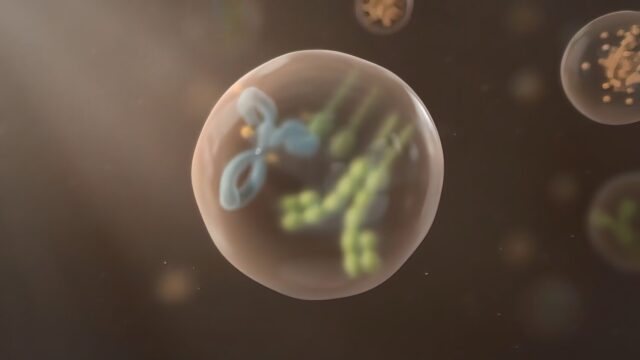
Alopecia areata was generally recognized as being caused by “stress.”
However, recent research strongly suggests it is an autoimmune disorder.
Alopecia areata differs in its mechanism and symptoms from Male pattern boldness (AGA) and early-onset balding (juvenile alopecia) in people in their 20s and 30s.
The causes and treatment methods for AGA are explained in detail in the following article.
That said, the mechanisms behind the onset and treatment of alopecia areata are still not fully understood.
The following are factors currently considered to be causes of alopecia areata.
- Autoimmune disease
- Disruption of the hair growth cycle
- Atopic predisposition
- Virus infection
- Genetics
- Psychological stress
- Decrease in female hormone levels after childbirth
- Vitiligo
- SLE (Systemic Lupus Erythematosus)
Autoimmune disease
Currently, “autoimmune disease” is considered a leading cause of alopecia areata.
Autoimmune disease occurs when the immune system, which normally fights off foreign invaders entering the body, malfunctions. It mistakenly identifies parts of the body as foreign and attacks them.
In alopecia areata, immune cells called “T lymphocytes” mistakenly identify hair follicles as enemies and attack them.
As a result, damage accumulates in the hair follicles, leading to hair loss.
Indeed, when skin from the affected areas of alopecia areata patients is removed and examined under a microscope, an abnormal accumulation of lymphocytes around the hair follicles is observed.
However, why such autoimmune abnormalities occur is not yet fully understood.
It was previously thought to be triggered by psychological stress.
However, the condition also occurs in newborn infants, who are unlikely to experience stress.
Current thinking suggests that allergies, possibly through complications, may trigger this autoimmune abnormality.
A predisposition to autoimmune diseases or a history of such conditions
The following predisposing factors and medical histories are considered to increase susceptibility to autoimmune diseases.
- Hashimoto’s disease, a thyroid disorder characterized by an enlarged thyroid gland or abnormal function, affects 10 to 20 percent of people aged 50 and older.
The Japanese Dermatological Association’s guidelines for alopecia areata state that thyroid disorders occur as a complication in approximately 8% of cases. - Thyroid dysfunction and collagen diseases such as systemic lupus erythematosus
- Rheumatoid arthritis
This disease occurs relatively frequently in women in their 30s to 50s
The cause is thought to be an immune system disorder - Type 1 diabetes
- Myasthenia gravis
Myasthenia gravis is a disease where proteins are destroyed by an autoimmune response at the junction connecting peripheral nerves and muscles. It causes generalized muscle weakness and fatigue, drooping eyelids, impaired eye movement, and double vision.
It is estimated that approximately 15,000 patients live in Japan, with a male-to-female ratio of 1:1.7, meaning women are more commonly affected. - Anemia
- Zinc deficiency
If multiple patches of hair loss appear or occur over a large area, it is also important to check whether any of the above conditions may be present.
Disruption of the hair growth cycle
In hair follicles affected by alopecia areata, the hair growth cycle (hair cycle) is disrupted.
Hair maintains its health by repeating the growth phase, where hair grows; the regression phase, where growth slows; and the resting phase, where hair falls out.
The hair cycle for scalp hair is said to last 3 to 6 years.
A healthy scalp typically has about 90% of hair in the growth phase and less than 10% in the resting phase.
However, due to the convergence of various factors, the hair follicles in the areas affected by alopecia areata become akin to being in the resting phase.
A 2019 study by Kyorin University titled “Approaches to Alopecia Areata Treatment: Pathology and Treatment Theory from the Perspective of Hair Cycle Dysregulation” reported the following:
In the later stages of alopecia areata, disruption of the hair growth cycle becomes a more significant factor.
Atopic predisposition
Individuals with an atopic predisposition are those who have atopic diseases such as atopic dermatitis, bronchitis, and allergic rhinitis.
A study conducted in Taiwan titled “Bidirectional Association Between Alopecia Areata and Atopic Dermatitis: A Population-Based Cohort Study in Taiwan” reported the following:
Patients with AA (alopecia areata) showed a significantly increased risk of developing AD (atopic dermatitis) after adjusting for potential confounders (aHR: 5.47; 95% CI: 4.76–6.28).
Similarly, patients with AD showed a significantly increased risk of developing AA (aHR: 6.00; 95% CI: 5.04–7.14).
This indicates a bidirectional association between AA and AD, suggesting that these two diseases share a common pathogenic mechanism.
A close relationship between alopecia areata and atopic dermatitis has been suggested.
It is said that over 40% of alopecia areata patients have an atopic predisposition.
Furthermore, more than half of patients have an atopic predisposition themselves or within their family, indicating a deep association with alopecia areata alongside genetic factors.
As a complication of alopecia areata, atopic dermatitis (and vice versa) may also develop.
Virus infection
Infection with viruses such as influenza can sometimes cause alopecia areata.
For example, the Hamamatsu University study “Alopecia Areata Induced or Aggravated by Swine Influenza Virus Infection” reports the following:
We report two representative cases of alopecia areata (AA) exacerbated by swine influenza virus infection.
Case 1 involved a 10-year-old boy with AA who developed a fever of 40°C and was diagnosed with swine influenza virus infection.
One month later, he developed hair loss, and the lesions gradually improved with dibutyl squalate treatment.
Case 2 involved a 4-year-old girl with AA who contracted swine influenza virus and developed hair loss two months later.
However, the mechanism by which viral infection causes alopecia areata remains unclear at present.
Genetics
In July 2020, a joint research group from Juntendo University and Tokai University published a paper titled “Disease susceptibility variants in the MHC region for alopecia areata affect gene expression related to hair keratinization and are involved in hair loss,” in which the following findings were presented.
We have identified CCHCR1 as one of the causative genes for alopecia areata for the first time worldwide.
Furthermore, by introducing the risk allele of the CCHCR1 gene from alopecia areata patients into mice using genome editing techniques, we successfully reproduced symptoms similar to those seen in human patients.
Additionally, we confirmed that the presence or absence of the CCHCR1 risk allele results in differences in the hair condition of alopecia areata patients.
This finding is considered conclusive, as it has been confirmed not only in mice but also in the hair condition of actual patients.
A large-scale study in China found that 8.4% of individuals with alopecia areata had family members with the condition, with the incidence rate increasing among closer relatives.
In Western countries as well, the risk of developing the condition is approximately ten times higher among first-degree relatives (such as parents, children, etc.) compared to the general population.
Studies using twins indicate a 55% incidence rate in monozygotic twins and 0% in dizygotic twins, suggesting a significant genetic component.
If you have a family member within three degrees of kinship with alopecia areata, you may have inherited a predisposition to the condition.
The relationship between thinning hair and genetic traits, along with testing methods, is explained in detail in the following article.
Psychological stress
Psychological stress is still considered a significant factor in the onset, worsening, and recurrence of alopecia areata.
When experiencing psychological stress, the sympathetic nervous system becomes active to resist it.
The sympathetic nervous system functions to accelerate the heart and lungs, raise body temperature, and prepare the body to fight stress.
Blood vessels constrict, reducing blood flow to the scalp.
Consequently, nutrients may not reach the hair follicles adequately, potentially triggering hair loss.
Furthermore, stress can be a trigger for various conditions, including autoimmune diseases.
However, since the primary cause is considered to be “autoimmune disease,” dwelling on thoughts like “Which stress caused this hair loss?” only produces more stress.
Decrease in female hormone levels after childbirth
The relative decrease in female hormones after childbirth is also said to be a cause of alopecia areata.
During pregnancy, female hormone levels in a woman’s body increase to over 100 times the normal amount.
After giving birth, hormone secretion levels rapidly return to normal.
Female hormones promote hair growth.
This rapid hormonal drop can sometimes trigger a condition known as postpartum hair loss.
In most cases, overall hair volume decreases, but it often manifests as alopecia areata.
While it usually resolves naturally within about six months, consult an obstetrician/gynecologist if it persists long-term.
Vitiligo
Vitiligo is a condition where patches of skin turn white.
The Japanese Dermatological Association’s guidelines for alopecia areata state that vitiligo occurs as a complication in approximately 4% of all cases.
Therefore, strictly speaking, it is not the cause of alopecia areata; rather, alopecia areata is often discovered when vitiligo develops.
Vitiligo occurs when pigment cells called “melanocytes,” which produce melanin pigment, decrease in number.
The mechanism of vitiligo has not yet been fully elucidated medically.
SLE (Systemic Lupus Erythematosus)
SLE (systemic lupus erythematosus) is a rare disease with causes that remain unclear, presenting symptoms such as fatigue, fever, and inflammation throughout the body.
In English, it is called “systemic lupus erythematosus,” and is often abbreviated as “SLE.”
Systemic lupus erythematosus can sometimes appear as a complication of alopecia areata.
Therefore, strictly speaking, it is not the cause of alopecia areata. Instead, alopecia areata is often discovered after the onset of fatigue and inflammation caused by SLE.
Treatment Methods for Quickly Healing Alopecia Areata at Hospitals
| Treatment method | |
|---|---|
| Local immunotherapy | A treatment that artificially induces inflammation in the affected area of alopecia areata to promote hair regrowth
If effective, hair regrowth can be seen within two to three months, and it is currently one of the most effective treatments available. |
| Topical steroid medication | Topical steroid medications suppress skin inflammation and immune function. |
| Cephalanthin, glycyrrhizin, and other antiallergic agents | For initial symptoms or mild cases, take medication to suppress the allergy.
The main component of glycyrrhizin is a plant called licorice. |
| Antihistamine | The Japanese Dermatological Association’s guidelines for alopecia areata also recommend it as a combination therapy. |
| Oral steroid medication | Administered in cases of rapid progression, its effectiveness is exceptionally high. |
| Steroid injection | Treatment involving direct steroid injections into the affected area
The injections may cause pain. This treatment is only applicable when the patches of hair loss are small or few in number. |
| Phototherapy | Targeted irradiation only to the desired treatment area Efficiently addresses localized symptoms with minimal irradiation time |
| Propecia and minoxidil | Propecia is also used by men who have both Male pattern boldness (AGA) and alopecia areata. Minoxidil has the effect of dilating blood vessels, helping to improve the scalp environment. |
| Snow-like Carbon Dioxide Pressure Therapy | This is a treatment for progressive symptoms.
To improve the immune state, the affected area is lightly applied with snow-like liquid nitrogen (or dry ice) to provide stimulation. |
| Wig | Since treatment takes time, you may use a medical wig temporarily. |
The main treatments for alopecia areata offered at AGA specialty clinics are listed above.
For those experiencing gradual hair loss at a pace like “Hmm, maybe my hair’s falling out more lately?” or whose hair loss is confined to one spot without spreading, many cases seem to resolve naturally.
If symptoms persist for over a month, or if the affected area spreads or new bald patches appear, consult a doctor.
If you suspect alopecia areata, we recommend visiting an AGA specialty clinic or a dermatologist.
For information on treatment methods for alopecia areata, including complementary therapies such as Kampo medicine and hair transplant treatments, please refer to the following article.
Prevention Methods for Alopecia Areata
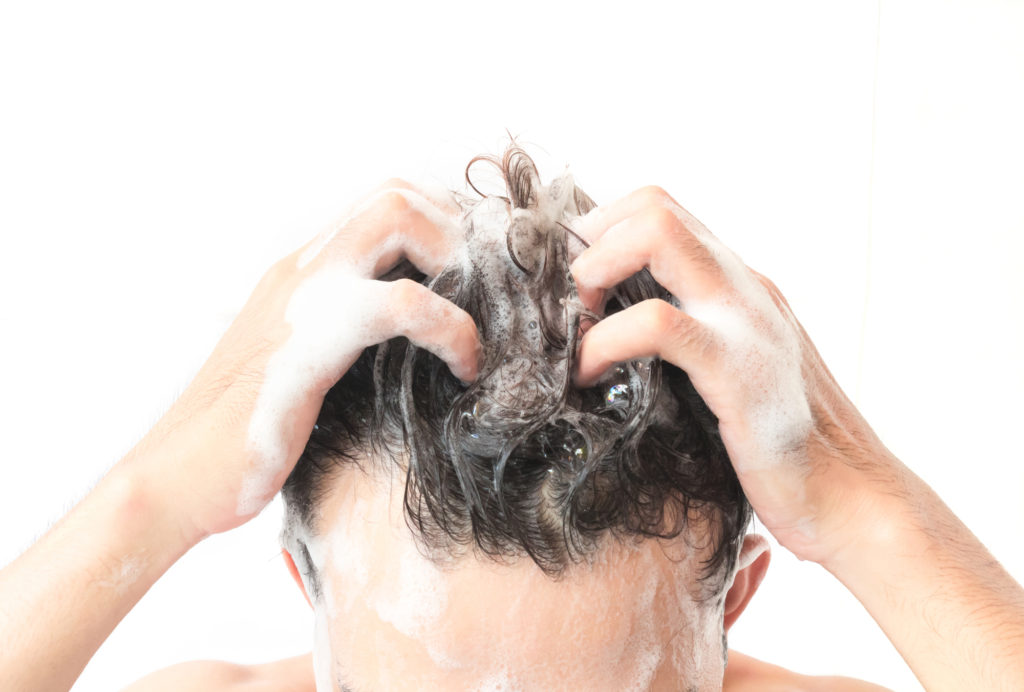
Here are ways to prevent alopecia areata in daily life.
- Eliminate the cause of stress
- Exercise to improve blood circulation
- Use a mild shampoo
- Scalp massage to promote blood circulation
Eliminate the cause of stress
The root cause of alopecia areata is stress.
To prevent alopecia areata, it is crucial not merely to relieve stress, but to eliminate its root causes.
By cutting off the sources of stress, we can expect to prevent alopecia areata.
Exercise to improve blood circulation
Moderate exercise is effective for relieving stress.
Aerobic exercises like walking promote blood circulation, ensuring sufficient nutrients reach the scalp.
However, if exercise itself causes stress, it cannot be expected to prevent alopecia areata.
It is important to enjoy and maintain exercise daily.
If long walks feel burdensome, consider incorporating a favorite sport into your daily routine.
Use a mild shampoo
Alopecia areata often occurs in individuals with allergic constitutions.
Those with allergic constitutions may experience adverse health effects from using inexpensive, over-the-counter shampoos.
We recommend using a low-irritation shampoo made with natural ingredients that does not contain allergens.
Proper shampooing can help maintain a healthy scalp environment.
Here is the correct hair washing method;
- Brush to remove dirt
- Wash away the grime with lukewarm water
- Wash your hair with the pads of your fingers
- Rinse out the shampoo
- Dry your hair with a low-heat dryer
Scalp massage to promote blood circulation
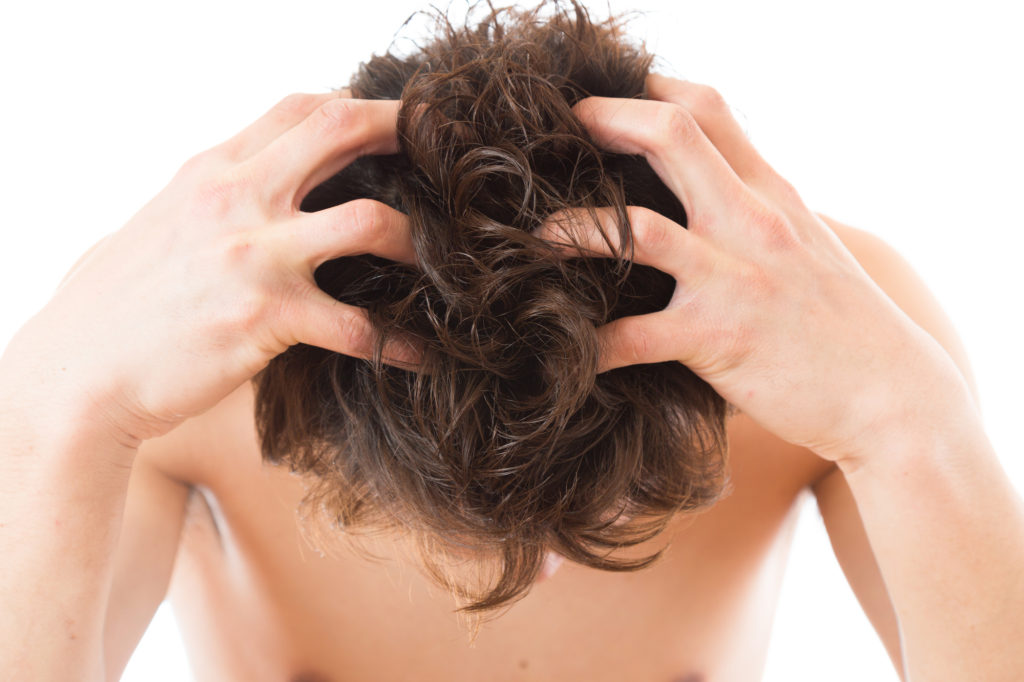
Scalp massage promotes blood circulation in the scalp, helping to improve thinning hair.
The crown of the head contains an acupuncture point called “Baihui” (in Mandarin 百会).
Baihui is known to be effective for promoting blood circulation and relieving stress.
However, when performing scalp massage, it is advisable to receive guidance from a salon or clinic with proper knowledge and technique.
Treatment for Alopecia Areata is Available at Clinics Specializing AGA.
Our AGA Hair Loss Treatment Clinic offers free consultations.
Our specialized hair loss counselors will attentively listen to your personal concerns, including stressors in your daily life.
Alopecia areata is a type of hair loss with a very high likelihood of recurring unless treated at its root cause.
When treating alopecia areata, we recommend seeking care at an AGA specialist clinic with expertise in related complications.
The following article explains in detail the differences between general dermatology/cosmetic dermatology clinics that advertise ‘Male pattern boldness (AGA) treatment available’ and specialized AGA clinics, as well as how to choose based on your symptoms.
Frequently Asked Questions
- Is stress the cause of alopecia areata?
Alopecia areata was long believed to be caused by “stress.” However, recent research strongly suggests it is an autoimmune disorder. Therefore, there is no need to dwell excessively on when or what stress might have triggered it.
An autoimmune disorder occurs when the immune system, which normally fights off foreign invaders, malfunctions and mistakenly identifies parts of the body as threats, attacking them. In alopecia areata, immune cells called “T lymphocytes” mistakenly identify hair follicles as enemies and attack them. This results in accumulated damage to the hair follicles, leading to hair loss.
However, the exact reason why such autoimmune abnormalities occur is not yet fully understood. For more details, please see Osaka AGA Kato Clinic’s article: “Alopecia Areata: Early Symptoms, Causes, and Why It’s Not Just Stress”
- What are the early symptoms of alopecia areata?
The following are typical early symptoms of alopecia areata.
- Round or oval patches of hair loss develop, with relatively distinct borders.
- The scalp begins to show through.
- Small pits or bumps appear on the nails.
This is called “nail pitting” and can be a sign of conditions like alopecia areata. - Has either atopic dermatitis, bronchitis, or allergic rhinitis.
Some individuals experience spontaneous recovery with only initial symptoms.
However, others may experience faster-than-expected progression. If two or more of the above points apply to you, we recommend seeking medical attention promptly. For more details, please see Osaka AGA Kato Clinic’s article: “Alopecia Areata: Early Symptoms, Causes, and Why It’s Not Just Stress”
- What causes alopecia areata?
The following are the factors currently considered to be causes of alopecia areata.
- Autoimmune disease
- Hair cycle irregularities
- Atopic predisposition
- Virus infection
- Genetics
- Psychological stress
- Decrease in female hormone levels after childbirth
- Vitiligo
The exact mechanisms behind the onset and treatment of alopecia areata are not yet fully understood. For more details, please see Osaka AGA Kato Clinic’s article: “Alopecia Areata: Early Symptoms, Causes, and Why It’s Not Just Stress”