
AGA Progression Signs: How to Identify Hair Loss Through Your Scalp and Improve Scalp Health
Key Points
- A greasy, itchy, or red scalp is likely a sign of excessive sebum production or inflammation caused by DHT, a substance linked to AGA.
- For successful AGA treatment, it is essential for a specialist to perform a differential diagnosis between AGA and conditions such as seborrheic dermatitis and to provide concurrent treatment.
- Since AGA treatment can become expensive depending on the stage of the condition, starting medication while symptoms are still mild is the most cost-effective and wise choice.
“Lately, I feel like my hair has lost some volume. But what bothers me even more is my greasy, itchy scalp and severe dandruff…”
If you’re experiencing these concerns, your scalp issues may not simply be a skin problem—they could be a sign that AGA (androgenetic alopecia) is progressing. While many people focus on the thinning hair itself, in many cases, the substances causing the hair loss are actually worsening the condition of the scalp.
In this column, We’ll explain the close connection between the progression of AGA and scalp problems from the perspective of a practicing dermatologist who has treated many patients at an AGA specialty clinic. I’ll help you accurately understand what’s happening on your scalp right now, avoid misguided self-treatment, and provide a concrete roadmap for halting the progression of AGA in the most effective and cost-efficient way.
By the time you finish reading this article, your concerns should be put to rest, and you should have a clear direction for taking the next step.
- What are the Scalp Symptoms Associated with AGA?
- Stickiness and excessive sebum production
- Itchy and red scalp
- Increased dandruff
- Are those scalp symptoms really just due to AGA?
- Risk of comorbidity with seborrheic dermatitis
- Risk of comorbidity with alopecia pityroides
- What Are Some Steps You Can Take on Your Own to Improve Your Scalp Health?
- Scalp massage
- Hair growth shampoo
- Diet
- Stress management
- Moderate exercise
- How to Improve Your Scalp Health Through AGA Treatment at a Clinic
- Average treatment costs
- The most cost-effective early medication treatment
- Use of generic drugs
- Conclusion
What are the Scalp Symptoms Associated with AGA?

Signs of AGA often manifest as a deterioration in scalp health before they appear as actual hair thinning. Correctly understanding these symptoms and assessing their progression are important self-check points for determining the right time to begin treatment.
Stickiness and excessive sebum production
The scalp is one of the areas of the body with the highest concentration of sebaceous glands, and its structure makes it highly susceptible to the effects of sebum secretion. The substance that excessively stimulates the activity of these sebaceous glands is none other than DHT (dihydrotestosterone), the primary culprit behind AGA.
DHT not only accelerates hair loss but also affects the sebaceous glands. As a result, numerous studies suggest that the sebaceous glands become overstimulated, leading to a significant increase in sebum production.
This is the direct reason why people with progressive AGA experience a “sticky scalp” and find that their hair “gets greasy quickly.”
Oral medications such as finasteride and dutasteride—which are the mainstays of AGA treatment—prevent the progression of hair loss by suppressing the production of DHT; however, by reducing DHT levels, they may also indirectly suppress excessive sebaceous gland activity, which in turn may help control scalp oiliness.
It is important to view scalp oiliness not as a sign that you should give up on treating hair loss, but as a sign that it can be improved through AGA treatment.
Itchy and red scalp
It is known that the progression of AGA is accelerated not only by hormonal factors but also by subtle, chronic inflammation occurring in the scalp. This chronic inflammation is one of the key factors that determine the success of hair loss treatment.
It has been suggested that around the hair follicles on a scalp affected by progressive AGA, there is subtle inflammation that is difficult to see with the naked eye, and that the production of substances called inflammatory cytokines may be involved. Cytokines are a type of protein responsible for intercellular communication; when produced in excess, they unnecessarily shorten the hair growth phase.This triggers a chain reaction in which the function of the hair papilla cells is inhibited, the hair growth cycle is disrupted, and hair loss accelerates.
In specialized hair regrowth treatments, injection therapies containing ingredients with antioxidant and antibacterial properties, as well as sebum-regulating ingredients (such as yeast extract and vitamin B6) that help control excess sebum secretion, may be considered to address this inflammation.
Increased dandruff
Dandruff is a clear sign of abnormal scalp cell turnover, and the underlying cause varies depending on the type of dandruff. Observing the condition of dandruff is extremely important when undergoing AGA treatment.
Dandruff can be broadly divided into two types.
One type is moist dandruff (seborrheic dandruff). This is caused by excessive sebum secretion and the proliferation of Malassezia fungi; it tends to be yellowish, sticky, and clings to the scalp.
If you notice large amounts of this type of dandruff, it is highly likely to be seborrheic dermatitis; when it occurs alongside AGA, it poses a dual risk of worsening the scalp environment and increasing hair loss.
Another type is dry dandruff (seborrheic dandruff). This occurs when the scalp becomes dry and dead skin cells flake off, resulting in large amounts of dry dandruff and severe itching.
The main causes are scalp dryness resulting from the use of harsh shampoos or over-cleansing that strips away too much sebum. Regardless of the type of dandruff, it carries the risk of accelerating the progression of AGA by clogging hair follicles or causing scalp inflammation.
It is essential to seek a diagnosis from a specialist rather than making your own judgment, and to receive guidance on appropriate care methods.
Are those scalp symptoms really just due to AGA?
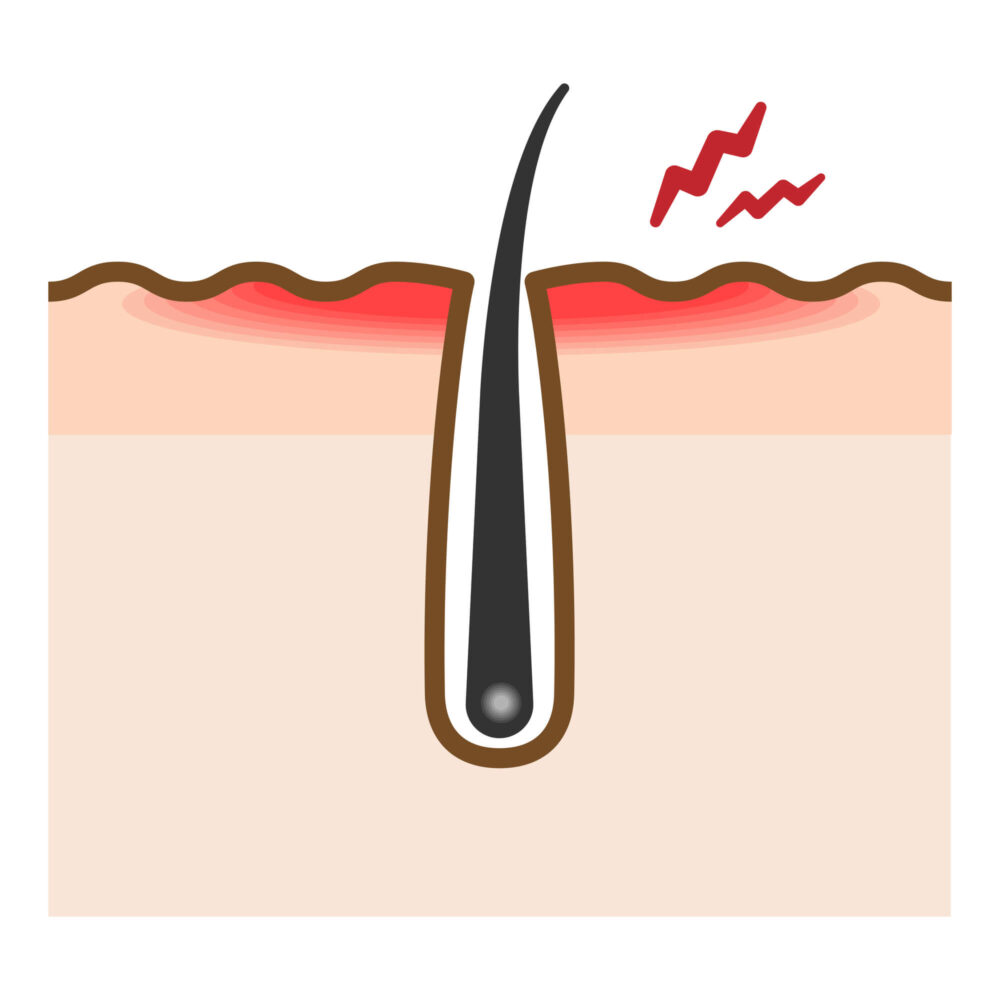 Symptoms such as a greasy scalp, itching, dandruff, and the accompanying hair loss are often mistaken at first glance for being caused by AGA, but this is not necessarily the case. To ensure successful AGA treatment, it is extremely important to accurately differentiate whether these symptoms are caused by other scalp conditions or whether they are occurring concurrently with AGA.
Risk of comorbidity with seborrheic dermatitis
Seborrheic dermatitis is an inflammatory skin condition caused by excessive sebum secretion and the overgrowth of Malassezia fungi, characterized by severe itching, greasiness, and yellowish, moist dandruff. If this inflammation becomes severe, it can progress to seborrheic alopecia.
In particular, when this condition progresses alongside AGA, the scalp environment deteriorates significantly, and the hair growth cycle becomes severely disrupted, greatly increasing the risk of dramatic hair loss.
If you experience symptoms accompanied by inflammation, you may require dermatological treatment in addition to AGA treatment; therefore, it is strongly recommended that you consult a specialist as soon as possible.
Risk of comorbidity with alopecia pityroides
Alopecia pityroides is a form of hair loss characterized by overall thinning of the hair caused by dry dandruff blocking hair follicles and triggering inflammation. There is a risk that symptoms may worsen due to improper hair care.
For example, if you use a harsh shampoo that strips away even the necessary natural oils, your scalp will become dry, making it more prone to dandruff.
If you experience these symptoms, it is strongly recommended that you consult a specialist, as dermatological treatment may be necessary to prevent the progression of hair loss.
There is a possibility of inflammation. Since you may also develop hair loss conditions other than progressive types like AGA, we recommend that you consult an AGA hair clinic immediately.
What Are Some Steps You Can Take on Your Own to Improve Your Scalp Health?

To treat AGA, you need to improve the condition of your scalp. However, if you try to improve it based on incorrect information, you may actually cause AGA to progress. With that in mind, here are five methods for improving the condition of your scalp.
Scalp massage
Many people try scalp massages when they’re concerned about a greasy scalp or dandruff. However, it’s important to properly understand their role and limitations.
Scalp massages are believed to improve blood flow, making it easier for nutrients to reach the hair follicle cells. However, strong stimulation can disrupt the scalp’s natural balance and actually increase the risk of inflammation and hair loss.
You should avoid irritation, especially if you have inflammation or redness. To minimize damage caused by friction, it is recommended to use a scalp care spray or oil and to massage gently.
As with medication, it is important to consult a doctor before applying strong stimulation on your own, and to find a method you can continue comfortably.
Instead of using your fingernails, use the pads of your fingers to press on your temples and hairline, and gently move your entire scalp. It’s best to visualize blood circulating throughout your entire scalp as you do this.
Excessive scalp massage can worsen the condition of your scalp, so limit it to about 5 minutes, two to three times a day. You shouldn’t expect dramatic changes when trying to improve the condition of your scalp.
Hair growth shampoo
When choosing a shampoo, it is recommended that you avoid products with overly strong cleansing power, select one that suits your scalp type, and wash your hair once a day while gently massaging your scalp.
However, AGA is a progressive condition, and to halt its progression, active ingredients that inhibit DHT production (such as finasteride and dutasteride) are necessary. Since hair growth shampoos do not contain these active ingredients, they are distinct from treatments that directly halt the progression of AGA.
The effectiveness of hair growth shampoos is limited to providing indirect support by keeping the scalp clean and reducing the risk of inflammation.
Diet
Continuous excessive consumption of foods high in fat and sugar increases sebum production, which is a major cause of a greasy scalp. Simply switching from a diet centered on fast food to a traditional Japanese diet—which is lower in salt and oil—can improve the condition of your scalp.
To keep your sebaceous glands functioning normally, be sure to maintain a balanced diet.
Stress management
When stress disrupts the autonomic nervous system, it can affect hormonal balance and lead to excessive sebum secretion. Properly managing stress—which places a burden on both the mind and body—and setting aside time to relax can indirectly help improve the condition of your scalp.
People who are sleep-deprived often have an imbalance in their autonomic nervous system, which can lead to symptoms such as poor blood circulation. If you have an irregular lifestyle, we recommend getting enough sleep to help restore balance to your autonomic nervous system.
Moderate exercise
A lack of exercise can lead to poor blood circulation, which in turn slows down the body’s overall metabolism. When metabolism slows down, dead skin cells on the scalp don’t shed as easily, and sebum tends to build up.
Moderate exercise promotes blood circulation, helps deliver sufficient nutrients to the scalp, and enhances the effectiveness of AGA treatment. Even a 30-minute walk each day can help improve blood circulation.
How to Improve Your Scalp Health Through AGA Treatment at a Clinic

The most effective approach is to undergo AGA treatment at a clinic to improve the condition of your scalp.
When considering AGA treatment, it’s important to understand your treatment options and the cost structure—and to know that starting treatment early, in particular, offers the greatest financial benefit by ultimately keeping the total cost of treatment down.
Average treatment costs
The cost of typical AGA treatment can be as low as a few thousand yen per month for mild cases, but the standard range is generally between 15,000 and 30,000 yen per month. As the condition progresses, treatment often requires not only oral medication but also expensive injection therapies, regenerative medicine, and surgical procedures, and costs tend to increase significantly, reaching hundreds of thousands of yen.
| Treatment categories | Main treatment options | Mechanism of action | Average costs (Generic / Monthly) |
|---|---|---|---|
| Hair loss prevention (Oral) | Finasteride tablets | DHT inhibition | 4,000–6,000 yen |
| Hair loss prevention (Oral) | Dutasteride tablets | DHT inhibition | About 8,000 yen |
| Injection therapy | Hair regrowth mesotherapy | Injections of growth factors and other substances into the scalp | 50,000–100,000 yen per session |
| Regenerative medicine | PRP therapy, etc. | Tissue repair, growth factor injections | 100,000–200,000 yen per session |
The most cost-effective early medication treatment
Medication is the most cost-effective treatment for AGA. And early treatment is the key to maximizing this cost-effectiveness.
AGA is a progressive condition. If treatment is started while hair loss is still in its early stages, the dosage of medication can be kept low, and the medication tends to produce noticeable results relatively quickly.
If you can curb hair loss and stabilize your scalp environment while the condition is still mild, you greatly increase your chances of avoiding expensive surgical treatments—such as mesotherapy, regenerative medicine, and hair transplants—that would otherwise be necessary once the condition progresses to moderate or severe stages.
In other words, starting medication early is a wise and cost-effective strategy for keeping the total long-term cost of treatment as low as possible.
Use of generic drugs
One specific way to reduce the financial burden is to use generic drugs.
For finasteride and dutasteride tablets used to treat AGA, there are generic medications available that contain the same active ingredients as the brand-name drugs but at a lower cost due to reduced development expenses.
For example, generic finasteride tablets can help reduce monthly costs compared to the brand-name drug (Propecia). We offer these generic medication options based on each patient’s financial situation and preferences.
If you have any concerns about the cost, please do not hesitate to consult with us.
Conclusion
A greasy scalp or chronic inflammation (itching, redness) is likely not just a minor skin issue, but rather an important sign indicating the progression of AGA or the presence of a concurrent condition such as seborrheic dermatitis. Overlooking these signs and continuing with improper self-diagnosed treatments carries the risk of worsening symptoms and accelerating hair thinning.
The surest way to overcome hair loss is to pay close attention to the signs your scalp is giving you, get an accurate diagnosis from an AGA specialist, and confirm a customized treatment plan that’s best suited to each reader’s individual scalp condition.
AGA is a progressive condition, and the more it progresses, the longer treatment tends to take and the higher the costs tend to be. Conversely, if you seek consultation while symptoms are still mild, there is a high likelihood that you will see results with medication alone, making this the most beneficial option in terms of both time and cost.
If you are concerned about a greasy scalp, dandruff, or itching, we strongly recommend that you schedule a free consultation at Osaka AGA Kato Clinic to have the condition of your scalp and hair thoroughly examined.
Frequently Asked Questions
- Will taking AGA medications (such as finasteride) also help improve scalp oiliness and inflammation?
Since AGA medications suppress the production of DHT (dihydrotestosterone), they are expected to indirectly inhibit the excessive activation of sebaceous glands caused by DHT, which may help improve greasiness.
However, scalp inflammation and severe seborrheic dermatitis involve other factors, such as the proliferation of Malassezia fungi, so they cannot be completely cured by AGA medications alone. In cases of severe inflammation, topical dermatological medications or specialized care may be necessary.
Based on a differential diagnosis by a specialist, the most effective approach is to undergo AGA treatment and dermatitis treatment simultaneously.
- Do hair growth shampoos and scalp massages help stop the progression of AGA?
Hair growth shampoos and scalp massages are not treatments that directly halt the progression of AGA. The role of hair growth shampoos is limited to providing “support” by keeping the scalp clean and reducing the risk of inflammation.
While massage can help improve blood circulation, strong stimulation can actually increase the risk of inflammation and hair loss, making it dangerous. To halt the progression of AGA, treatment with oral medications such as finasteride or dutasteride—which suppress DHT—is essential.
Self-care should be performed under a doctor’s guidance and for the purpose of supporting your treatment.