
AGA Hair Loss: Early Signs, Differences from Stress-Related Hair Loss, and Treatment Options
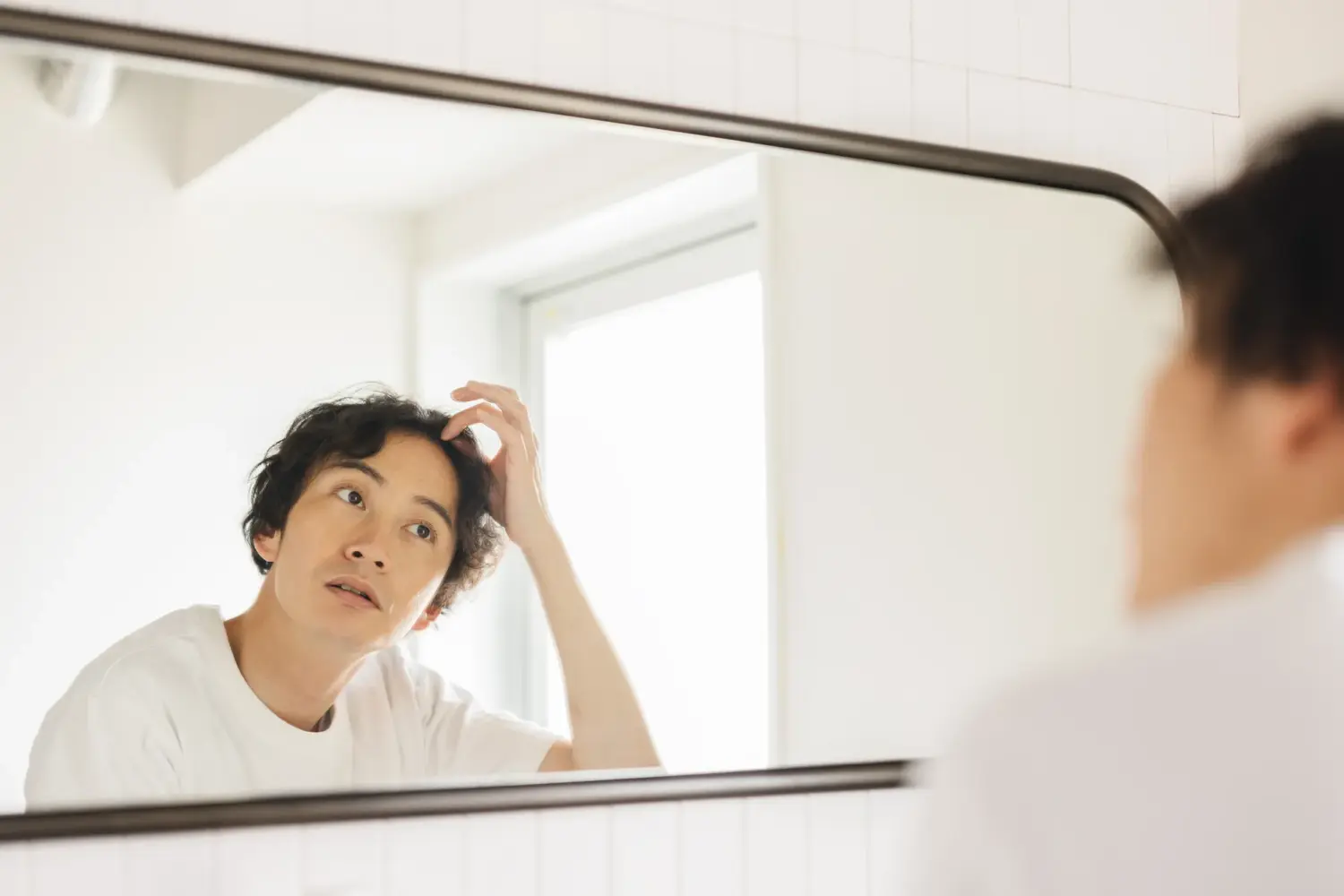
Have you noticed recently that you’re losing more hair or that your hairline is receding? In its early stages, AGA (androgenetic alopecia) can be difficult to distinguish from other types of hair loss, which is why many people feel anxious about it.
In particular, it’s easy to confuse AGA with stress-related or seasonal hair loss, leading to the misconception that “it will go away on its own if I just wait and see.” However, AGA is a progressive condition, and if left untreated, it will definitely worsen.
In this article, we’ll provide an easy-to-understand explanation of everything from the specific areas affected by AGA, changes in hair quality and hair follicles, and how it differs from other types of hair loss, to how to identify early symptoms, as well as specific examples of treatments and self-care.
Please be sure to read this article all the way through to help with early detection and early intervention.
Start your hair loss treatment at Osaka AGA Kato Clinic, which treats over 300 patients per month. Find the treatment that’s right for you with a free consultation. Click here to book an appointment via LINE.
- Characteristics of Hair Loss Caused by AGA
- Areas affected by AGA and the order in which hair falls out
- Why do my hair strands get thinner and shorter?
- Changes observed in hair follicles
- The Difference Between Normal, Stress-Related, and Seasonal Hair Loss and AGA
- Characteristics and causes of stress-induced hair loss
- Reasons for seasonal hair loss and how to recognize it
- The appearance and number of natural hair shedding
- The difference from AGA is that it is “progressive.”
- Don’t Miss the Early Signs of AGA
- Signs of an M-shaped hairline, such as a receding forehead or hairline
- The difference from the “O-shaped” pattern, where the crown thins
- Be aware if your hair’s volume or density decreases
- Early-stage scalp issues such as itching and excess sebum
- How to Check for Hair Loss
- How to check the number of hairs lost while shampooing
- Changes in hair quality you can notice while brushing
- Causes of AGA and the Impact of Lifestyle Habits
- The relationship between genetics and the male hormone (DHT)
- Lifestyle changes and self-care methods to promote hair growth
- AGA Treatment Options and the Treatment Process
- The benefits of seeing a specialist at an AGA clinic
- Choosing a trustworthy clinic
- The differences and effects of finasteride and minoxidil
- Estimated duration of treatment effects and the importance of continuity
- Conclusion
Characteristics of Hair Loss Caused by AGA
Hair loss caused by AGA (androgenetic alopecia) is characterized by the order in which it progresses, the quality of the hair, and the shape of the hair follicles.
This article explains where hair loss begins, why hair becomes thinner and shorter, and the specific changes that occur in the hair follicles.
Areas affected by AGA and the order in which hair falls out
AGA follows a specific pattern of progression, characterized by starting in particular areas. Hair loss typically begins at the hairline on the forehead (especially near the temples) and then gradually thins at the crown. These are the typical patterns known as the “M-shaped” and “O-shaped” patterns.
This sequence is related to sensitivity to DHT (dihydrotestosterone), a male hormone believed to be the cause of AGA. Hair follicles in the frontal and crown areas are particularly sensitive to DHT and are thought to be susceptible to its effects at an early stage.
Therefore, if you notice hair loss on your forehead or at the crown of your head, you should consider the possibility of AGA and take action early. Even at the stage where you simply feel that your hair is “starting to thin out” based on appearance, the condition may already be progressing.
Why do my hair strands get thinner and shorter?
One characteristic of hair loss caused by AGA is that the hair becomes thinner and shorter. This is caused by abnormalities in the hair growth cycle, resulting in a phenomenon known as “hair softening,” in which hair falls out before it has fully grown.
Normally, hair goes through a cycle of “growth phase (approximately 2–6 years) → transition phase (approximately 2–3 weeks) → resting phase (several months).”
However, with AGA, the growth phase can be shortened to less than one year, causing hair to fall out before it has a chance to grow thick and long. As a result, the hair that falls out is fine, like vellus hair, and lacks sufficient length.
However, just because you have a lot of fine, thinning hair doesn’t necessarily mean you have AGA; other factors, such as stress, aging, or improper hair care, may also be involved.
Thinner hair reduces the overall density and volume of your hair, which can significantly affect your appearance. If you find yourself thinking, “My hair feels flat” or “I can’t get my hair to style the way I want,” these may be signs that your hair is becoming finer.
Changes observed in hair follicles
If you examine the hair follicles of fallen hairs, you may notice signs specific to AGA. If the hair follicles are in any of the following conditions, you should be cautious.
- Small
- It’s deformed
- Dark-colored
- With a white lump on it
In normal hair shedding, the hair follicles are often plump, round, and white, but in cases of AGA, the follicles may not grow fully due to nutrient deficiencies or other factors, and may appear shriveled or discolored.
The white clumps attached to the hair follicles are primarily either “hair follicle sheaths” or “sebum.” Hair follicle sheaths are translucent and pose no problem, but sticky white clumps are sebum, and excess sebum can lead to a deterioration of the scalp environment.
The condition of these hair follicles can serve as a reference for determining whether AGA is present. If it is difficult to make a visual judgment, it is advisable to undergo a diagnosis using a microscope at a specialized clinic.
The Difference Between Normal, Stress-Related, and Seasonal Hair Loss and AGA
AGA isn’t the only cause of hair loss. Temporary hair loss caused by stress or seasonal changes also occurs.
We’ll compare the characteristics of each type of hair loss and explain in detail how to distinguish them—both in terms of how they differ from natural hair loss and in light of AGA’s characteristic progressive nature.
Characteristics and causes of stress-induced hair loss
When a person experiences severe mental or physical stress, they may experience telogen effluvium, a temporary increase in hair loss. This occurs because stress causes the hair follicles to stop growing and enter the shedding phase earlier than usual.
This type of hair loss is characterized by a large number of hairs falling out all at once over a short period of time. While it may appear as though the hair has suddenly thinned, in many cases it will naturally recover once the stress subsides.
On the other hand, since AGA progresses gradually, a sudden increase in hair loss is most likely caused by stress. To determine the cause, it’s important to consider the timing of the hair loss and your current lifestyle.
Reasons for seasonal hair loss and how to recognize it
During seasonal transitions—especially from fall to winter—hair loss may temporarily increase. This phenomenon is similar to the molting season in animals and occurs because humans also experience seasonal fluctuations in their hair growth cycle.
Seasonal hair loss is characterized by hair falling out evenly across the entire scalp and by the fact that it subsides naturally within a few weeks to about one month. Additionally, the hair that falls out is thick and strong, and no abnormalities are observed in the hair follicles.
The key factor in distinguishing between this type of temporary hair loss and AGA is whether or not the hair grows back. If hair loss continues over a long period of time, or if hair becomes noticeably thinner in specific areas, you should suspect AGA.
The appearance and number of natural hair shedding
Even in good health, it is normal to lose about 50 to 150 strands of hair a day. Naturally shed hair is thick and strong, with a plump, white, round hair root.
In addition, since the amount of hair loss fluctuates gradually over time, there’s no need to worry excessively if you simply notice a slight increase. However, you should be particularly vigilant if the number of hairs left on your shampoo or pillow clearly exceeds 200, or if your hair overall appears to be getting thinner.
By visually checking the quality of your hair and the condition of your hair follicles, you can get a sense of whether the hair loss is normal.
The difference from AGA is that it is “progressive.”
The biggest difference between AGA and other types of hair loss is that AGA is a progressive form of hair loss that does not resolve on its own. While hair loss caused by stress or seasonal changes is temporary and reversible, AGA progresses steadily the longer it is left untreated.
Although it’s hard to notice in the early stages, thinning hair at the hairline and crown gradually spreads, and as the hair becomes finer and shorter, the scalp begins to show through. This progression is precisely why AGA should be addressed early on.
The key to identifying AGA is to pay attention not only to the number of hairs you’re losing but also to whether these changes are continuing.
Don’t Miss the Early Signs of AGA
AGA is a progressive form of hair loss, and recognizing and addressing it in its early stages can significantly impact the future health of your hair.
We’ll explain the signs to watch for—particularly changes in your hairline and crown, hair density, and scalp health. Paying attention to even the slightest changes is the key to early treatment.
Signs of an M-shaped hairline, such as a receding forehead or hairline
One of the most typical early symptoms of AGA is the receding hairline on both sides of the forehead, forming what is commonly known as an “M-shaped” pattern.
If, when you look in the mirror, you notice that “your forehead seems wider than it used to be” or “your scalp is more visible when you sweep your hair back,” these signs may indicate that the condition is beginning.
M-shaped hair loss tends to occur in areas that are particularly susceptible to the effects of DHT (dihydrotestosterone) and may progress asymmetrically from side to side. Since it’s hard to notice in the early stages, self-checks—such as taking photos each month to compare—are effective.
The difference from the “O-shaped” pattern, where the crown thins
Along with the M-shaped pattern, another type of hair loss that’s easy to overlook is thinning at the crown—the so-called “O-shaped” pattern. Since it’s difficult for the person experiencing it to see, many only become aware of it after being pointed out by others.
In the early stages of O-shaped hair loss, the hair around the crown becomes thinner and less dense, making the scalp visible through the hair. Since the crown is naturally a densely hair-covered area, even a slight decrease in density can significantly alter one’s appearance.
Because this is an area that’s easy to overlook, self-checks and objective feedback from others are important.
Be aware if your hair’s volume or density decreases
If you feel that “the amount of hair loss hasn’t changed, but the appearance of your hair has,” it’s possible that your hair density or volume has decreased.
Since AGA is accompanied by “hair thinning”—a condition in which hair becomes finer and shorter—the appearance of your hair can change significantly even if the actual number of hairs hasn’t decreased substantially.
Changes such as hair becoming flat after blow-drying or an increasing area where the scalp is visible are important signs of advancing AGA. Difficulty styling your hair is also one of the early symptoms that is often overlooked.
Early-stage scalp issues such as itching and excess sebum
In the early stages of AGA, some people experience a deterioration in their scalp health. You should be especially vigilant if you have any of the following symptoms.
- Itching
- Greasy texture
- Excessive dandruff
Increased sebum production caused by DHT, as well as clogged pores and inflammation, may be damaging the hair follicles.
While these are not direct causes of AGA, they can exacerbate hair loss. Therefore, if your symptoms persist, it is important to seek a scalp examination and appropriate treatment from a specialist rather than relying on over-the-counter shampoos or self-care measures.
How to Check for Hair Loss
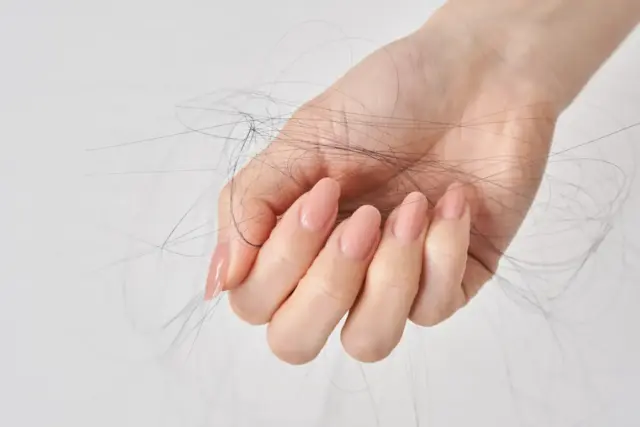
By observing the amount and quality of your hair loss, as well as the condition of your hair follicles, you can make an initial assessment of whether you have AGA.
We’ll explain specific self-check methods you can perform while shampooing or brushing your hair, as well as signs of hair loss to watch out for. Checking these regularly makes it easier to detect and address the condition early on.
How to check the number of hairs lost while shampooing
The easiest time to check how many hairs you’re losing is while shampooing. By counting the hairs left in the drain or on your hands as you wash your hair, you can get a rough idea of how many hairs you lose in a day.
It is said that normal hair loss is about 50 to 100 strands per day, and when shampooing, the general guideline is about 30 to 60 strands.
The key point to check is whether the hair loss is consistent. If you observe it for a few days and notice that “there are more than 60 hairs every time” or “there’s no sign of the number decreasing,” it’s highly likely that you’re experiencing progressive hair loss such as AGA or a scalp condition.
We recommend using a drain strainer, as it helps collect the hairs in one place, making it easier to check them.
Changes in hair quality you can notice while brushing
You can assess changes in hair quality by looking at the hair that falls out while brushing. You should pay particular attention to whether your hair has become “thinner,” “shorter,” or “softer” than before.
As AGA progresses, the growth phase of the hair shortens, preventing it from growing to its full potential, resulting in thin, short “fine hair.” This is a typical sign of AGA and leads to a loss of overall hair volume.
Be sure not to overlook even minor changes—such as hair becoming more prone to tangling or feeling different to the touch—as they are signs of changes in hair texture.
You can assess changes in hair quality by looking at the hair that falls out while brushing. You should pay particular attention to whether your hair has become “thinner,” “shorter,” or “softer” than before.
Causes of AGA and the Impact of Lifestyle Habits

While genetics and hormones play a major role in the onset of AGA, daily lifestyle habits also influence its progression.
We’ll explain the main causes of AGA and the aspects of your lifestyle that you can improve, as well as how to practice self-care to promote hair regrowth.
The relationship between genetics and the male hormone (DHT)
The primary cause of AGA is the effect of “DHT (dihydrotestosterone),” a type of male hormone. DHT is produced when testosterone is converted by an enzyme called 5α-reductase; by binding to androgen receptors in the hair follicles, it inhibits follicle growth and causes hair loss.
Whether you are susceptible to the effects of DHT is determined by genetics. In particular, it has been proven that the risk of developing AGA increases if there is a history of hair loss in the maternal family (such as the maternal grandfather), although the paternal family history also plays a role.
Furthermore, AGA is a multifactorial genetic disorder involving multiple genes, and the risk of onset, rate of progression, and severity vary from family to family.
If there are many people in your family with thinning hair, we recommend considering early intervention. While genetics cannot be avoided, it is entirely possible to slow the progression of the condition through early intervention.
Lifestyle changes and self-care methods to promote hair growth
By adopting healthy lifestyle habits, you can help slow the progression of AGA and create an environment conducive to hair regrowth. Specifically, the following self-care practices are effective:
- Get enough sleep (aim for 6 to 8 hours)
- Aim for a balanced diet rich in protein, vitamins, and mineralsIncorporate light exercise (such as walking or stretching) to promote blood circulation
- Make a conscious effort to quit smoking and cut back on drinking
- Promote blood circulation with a scalp massage
- Stress management (Making time for hobbies and relaxation)
In addition, you can enhance the effectiveness of your self-care routine by using over-the-counter scalp care products or hair growth treatments containing minoxidil in conjunction with your regular routine.
However, since a medical approach is often necessary for the fundamental treatment of AGA, we recommend consulting a specialist if you have any concerns. Taking consistent action is the first step toward protecting the future of your hair.
AGA Treatment Options and the Treatment Process

While AGA does not resolve on its own, appropriate treatment can slow its progression and promote hair regrowth.
We’ll explain the key points you should know before starting treatment, including the benefits of visiting a specialized clinic, the differences between treatment medications, and the importance of consistency.
The benefits of seeing a specialist at an AGA clinic
AGA treatment can be carried out more effectively by consulting a specialized clinic. The biggest advantage is that you can receive an accurate diagnosis from a specialist and a treatment plan tailored to your individual condition.
For example, even if the cause of hair loss might be something other than AGA (such as alopecia areata or seborrheic dermatitis), a specialist can accurately determine the cause.
Additionally, receiving comprehensive treatment support—including guidance on lifestyle habits and management of side effects—is a major source of peace of mind.
An increasing number of clinics now offer free initial consultations and online appointments, making it much easier to seek medical care than it used to be.
Choosing a trustworthy clinic
Choosing a clinic you can trust is extremely important for continuing your treatment. Be sure to check the following points.
- Whether there are any specialists on staff
- Whether they have extensive treatment experience
- Whether the explanations are thorough without being pushy
- Whether the pricing structure (such as a free first session and recurring fees) is clear
- Whether it is located in a place that makes it easy to continue visiting, or whether it offers online services
Don’t be swayed by low prices or flashy advertising; what’s important is whether you can have a conversation with a trustworthy doctor. If you’re unsure, it’s a good idea to consult with several clinics and compare them.
The differences and effects of finasteride and minoxidil
The two mainstay medications for AGA treatment are “finasteride” and “minoxidil.” They work through different mechanisms and involve different treatment approaches.
Finasteride is an oral medication primarily intended to slow the progression of androgenetic alopecia (AGA).
This medication is specifically designed to stop hair loss and is suitable for people who want to maintain their current hair condition or slow its progression.
Minoxidil is used as a topical medication (also found in over-the-counter hair growth products) and as an oral medication, and it works to promote hair growth. It is an ingredient that supports the process of “growing hair.”
Because there are risks of side effects and individual differences in how the body responds, it is extremely important to consult a doctor and develop an optimal treatment plan rather than making decisions on your own.
Estimated duration of treatment effects and the importance of continuity
AGA treatment does not produce immediate results; generally, it takes about 3 to 6 months from the start of treatment before you begin to notice any effects.
In particular, during the first one to two months of treatment, you may experience “initial shedding,” a temporary increase in hair loss. This is a sign that new hair is beginning to grow and serves as evidence that the treatment is working properly.
It is important to understand that consistency is key in AGA treatment, and that the timing of results varies from person to person. Continuing treatment without getting impatient and staying in close communication with your doctor throughout the process are sure steps toward improving hair loss.
Conclusion
Hair loss caused by AGA differs significantly from other types of hair loss in terms of the pattern of progression, hair quality, and changes in the hair follicles. If you’ve noticed that “you’ve been losing more hair lately” or that “your hair has become thinner,” it’s important not to overlook the early signs of AGA and to take steps such as conducting a self-check and making lifestyle changes.
Additionally, if you find it difficult to assess your condition on your own, consulting a specialist clinic will allow for an accurate diagnosis and recommendations for the best treatment options.
Since AGA is a progressive condition, early intervention is key. Use this article as a guide and take the first step toward protecting the future of your hair.
If you are concerned about AGA, we recommend consulting a specialist as soon as possible. At Osaka AGA Kato Clinic, we will work closely with you to address your concerns and recommend the most appropriate treatment plan. Click here to book an appointment via LINE.
Frequently Asked Questions
- How is hair loss caused by AGA different from natural hair loss?
Hair loss caused by AGA differs from natural hair shedding that occurs as part of the normal hair cycle; it is progressive and has distinct characteristics.
In AGA, the hair growth phase is shortened, causing hair to fall out before it can grow to its full thickness and length. As a result, the shed hair tends to be thin and short, and the hair follicles are often darkened or deformed. Additionally, hair loss concentrated in specific areas, such as the hairline and crown, is a characteristic trend of AGA.
Thus, AGA can be clearly distinguished from natural hair loss based on the quality and location of the shed hair, as well as the condition of the hair follicles.
- How should I perform a self-check for AGA?
You can easily perform a self-check for AGA as part of your daily routine.
For example, it’s helpful to consciously count the number of hairs that fall out while shampooing or brushing your hair. You should also check your hairline and the crown of your head in the mirror to see how much scalp is showing through. If you notice that your forehead has become wider or the scalp on the top of your head is more visible than before, you should be cautious.
Furthermore, closely examine the hair roots of the strands you lose; if you notice thin, short hairs, darkened roots, or white flakes attached to them, you may have AGA. By performing these self-checks regularly, you can detect any abnormalities early on.
- When should I start treatment for AGA?
Treatment for AGA is most effective when started as soon as you notice thinning hair or hair loss. This is because AGA is a progressive form of hair loss that does not resolve on its own, and the longer it goes untreated, the more hair density decreases.
The earlier treatment begins, the easier it is to preserve existing hair and achieve hair regrowth. Additionally, in the early stages, progression can be slowed with relatively mild treatment, minimizing both the physical burden and the cost. If you have even the slightest concern, we recommend consulting an AGA specialist clinic rather than trying to diagnose or treat the condition on your own.