
Age-Related Hair Loss vs. Senile Alopecia vs. AGA: Key Differences Explained
Recently, there has been a significant increase in the number of people in their 20s—a relatively young age—who are experiencing noticeable signs of AGA.
AGA progresses when testosterone, a male hormone, binds with an enzyme called “5α-reductase” and is converted into “DHT (dihydrotestosterone),” a harmful male hormone that causes AGA.
While the incidence of AGA tends to increase with age, does that mean everyone will inevitably develop AGA as they get older?
There are many people who maintain shiny, voluminous hair even as they age.
What is the relationship between age and AGA?
In this article, we’d like to explore the relationship between AGA and aging.
Is it possible to maintain youthful-looking hair even as you get older?
- The Relationship Between AGA and Age-Related Hair Loss
- What is the hair growth cycle and How does it affect healthy hair growth?
- Causes of hair thinning due to aging
- The Difference Between Senile Alopecia and AGA
- Types of AGA: The Hamilton-Norwood Scale
- What are the symptoms of Senile alopecia?
- Can Age-Related Hair Loss be Prevented?
- 5 Tips for combating age-related hair loss
- A balanced diet
- Quit smoking
- Good-quality sleep
- Moderate exercise
- Scalp massage
- It’s possible to prevent hair loss even as you get older!
The Relationship Between AGA and Age-Related Hair Loss
As we age, our bodies undergo various changes. Hair grows in a cycle known as the hair growth cycle. AGA is caused by disruptions in this hair growth cycle. To understand the relationship between AGA and age, it seems we need to understand the hair growth cycle. What is the causal relationship between age and AGA?
What is the hair growth cycle and How does it affect healthy hair growth?
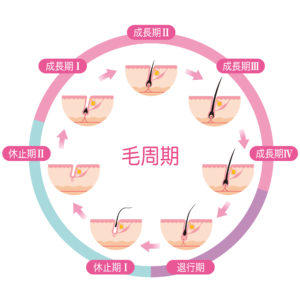
There is a cycle known as the “hair growth cycle” in which hair grows and sheds. People who develop AGA often have abnormalities in this cycle. The normal hair growth cycle is described below.
① The hair follicle becomes active and the hair grows.
② In a normal hair follicle, the hair grows for approximately 2 to 6 years (anagen phase).
③ The hair follicle begins to shrink (catagen phase).
④ The hair follicle completely degenerates and the hair falls out.
⑤ A new hair follicle begins to become active.
This is the normal hair growth cycle. In AGA, the anagen phase (step 2) is shorter than in healthy individuals, and the hair follicle degenerates in about one year. The factor that shortens the anagen phase is “dihydrotestosterone” (DHT). Treatment for AGA typically begins with the prescription of “Zagallo,” which inhibits DHT, or “Minoxidil,” which promotes blood circulation. So, are there solutions for age-related hair thinning?
Causes of hair thinning due to aging
As we age, we experience physical changes such as back and joint pain and a decline in physical strength. The likelihood of developing hair problems also increases with age. Below are the factors contributing to age-related hair problems.
- Reduced blood flow due to atherosclerosis
- Slowed metabolism
- Weakening of hair follicle cells
- Accumulation of stress
- Genetic factors
The main factors contributing to age-related hair problems appear to be poor blood circulation, a decline in metabolism, and accumulated stress. The age-related hair thinning described above becomes noticeable in one’s 60s and is therefore referred to as “senile alopecia.” It appears that issues with the hair growth cycle can also arise due to arteriosclerosis and a decline in metabolism. Like AGA, age-related hair problems also seem to be linked to the hair growth cycle.
The Difference Between Senile Alopecia and AGA
The symptoms of AGA differ from those caused by aging. What exactly is the difference between androgenetic alopecia and age-related hair loss? Is there a way to distinguish between AGA and hair loss caused by aging? Here, we’ll explain the differences between AGA and age-related hair thinning.
Types of AGA: The Hamilton-Norwood Scale
AGA is classified into nine patterns known as the “Hamilton-Norwood Scale.” The Hamilton-Norwood Scale is described below.
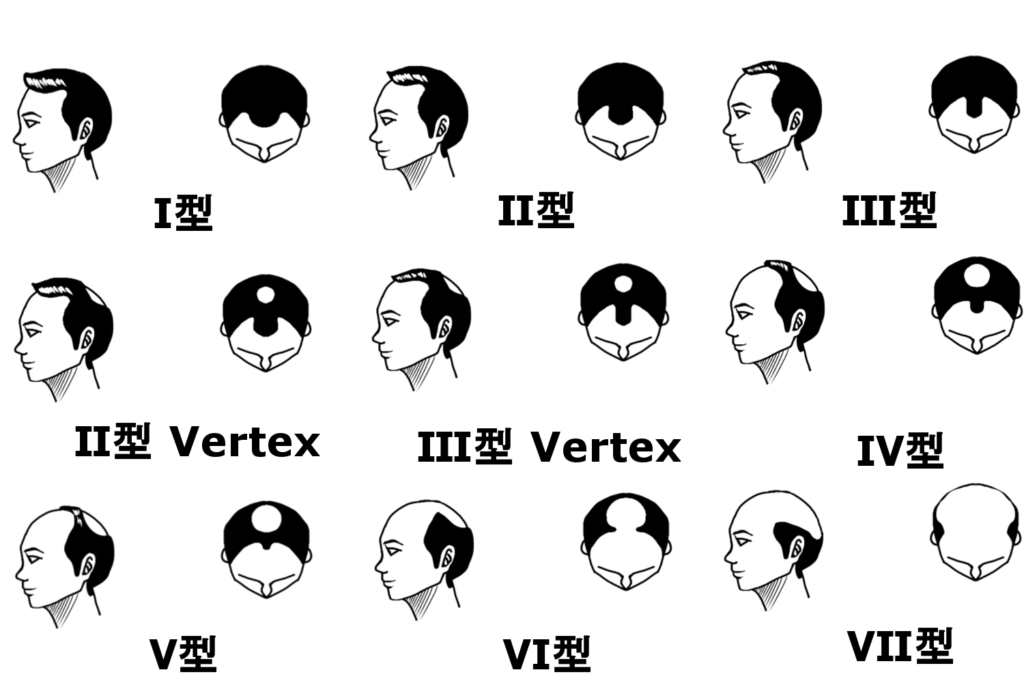
| Type I | A condition in which the hairline begins to recede from the forehead in an M-shaped pattern |
| Type II | Advanced stage of Type I |
| II Vertex Model | Type II + thinning at the crown in an O-shaped pattern |
| Type III | A condition in which Type II has progressed and the hair on the entire scalp has thinned |
| Type III Vertex | Type III with thinning at the crown in an O-shaped pattern |
| Type IV | A condition in which the hairline has receded further than in Type III, and the crown is also thinning to the extent seen in Type 0 |
| Type V | Advanced stage of Type IV |
| Type VI | A condition in which hair growth is limited to the temples |
| Type VII | Type VI alopecia has progressed, and hair density in the temporal regions has decreased |
These nine patterns of AGA were developed by Dr. Hamilton, an American dermatologist, based on a collection of clinical cases. The classification was later revised by Dr. Norwood, and is now known as the “Hamilton-Norwood Scale.” There are nine distinct patterns of AGA, classified according to the stage of progression. AGA encompasses a variety of hair loss types. So, how does age factor into this?
What are the symptoms of Senile alopecia?
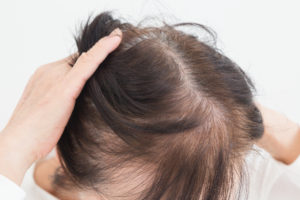
Androgenetic alopecia, which occurs with age, is characterized by hair loss that results in a loss of overall hair volume.
A similar form of hair thinning is “FAGA” (female androgenetic alopecia), often referred to as the female version of AGA. With FAGA, hair gradually becomes finer, overall hair volume decreases, and the scalp becomes visible. Age-related hair thinning tends to progress in a similar manner to FAGA.
While age-related hair thinning is influenced by dihydrotestosterone (DHT), prescribing medications like Zagallo to suppress DHT may not always yield the desired results. Since there is a risk of health complications due to the side effects of medications like Zagallo, AGA treatment clinics carefully explore treatment methods that place minimal burden on elderly patients.
Age-related hair thinning can be prevented to some extent. How can we prevent age-related hair problems before they occur?
Can Age-Related Hair Loss be Prevented?
Even for those who do not have AGA, hair volume tends to decrease overall as we age. While the aging process itself cannot be prevented, it is possible to maintain a healthy scalp environment.
With that in mind, we would like to share some strategies for addressing age-related hair thinning.
5 Tips for combating age-related hair loss

Medications such as Zagallo have been shown to suppress dihydrotestosterone (DHT) and improve the hair growth cycle in cases of androgenetic alopecia (AGA). It is believed that hair problems that worsen with age may be caused, in part, by a decline in metabolism and the deterioration of hair matrix cells.
So, what can be done to grow healthy hair that defies the effects of aging? Below, we introduce preventive measures that are considered effective against hair problems caused by aging.
- A balanced diet
- Quit smoking
- Good-quality sleep
- Moderate exercise
- Scalp massage
To prevent hair thinning caused by aging, it is crucial to improve your lifestyle habits while you are still young. Those who lead irregular lifestyles should be particularly careful. It seems important to reassess your lifestyle habits starting in your 20s and 30s.
A balanced diet
A balanced diet is essential for healthy hair. Soybeans, meat, and fish provide the protein that serves as the building blocks for hair.
In particular, isoflavones found in soy products such as natto and soy milk are believed to help combat AGA and FAGA. Fruits and vegetables provide vitamins that help deliver nutrients to the hair.
To prevent hair loss caused by aging, as well as AGA, a Japanese diet rich in vegetables and soy products is recommended. Start adopting a diet centered on fish and vegetables while you’re still young, in your 20s and 30s.
Quit smoking
Long-term smoking causes blood vessels to constrict. When blood vessels constrict, sufficient nutrients cannot reach the scalp, increasing the risk of a deteriorating scalp environment. Smoking is also a cause of male pattern baldness (AGA). In addition, heavy smokers face a higher risk of cancer.
Regardless of age, smoking is a factor that increases the risk of various diseases, so caution is necessary. By taking steps to quit smoking while you are still young, you can also reduce your risk of AGA.
Good-quality sleep
Getting good-quality sleep is also important, and the period from 10 p.m. to 2 a.m. is often referred to as the “golden hours” for sleep.
Research shows that sleeping during this time promotes the secretion of growth hormones. If you regularly pull all-nighters for work, we highly recommend getting sleep during these “golden hours” from 10 p.m. to 2 a.m.
Getting enough sleep is also an effective way to prevent AGA. Start establishing a regular sleep schedule and getting enough sleep from a young age.
Moderate exercise
Age-related hair loss is believed to be caused, in part, by poor blood circulation.
As we get older, the muscles in our legs and lower back gradually weaken, and many people find it a hassle to exercise. Since moderate exercise helps maintain muscle strength and improve blood circulation, try to incorporate activities you can stick with—such as a daily walk—into your daily routine. Moderate exercise can also help improve AGA.
Scalp massage
As we age, the scalp tends to become stiffer, which can lead to poor blood circulation. That’s why we recommend scalp massages. In particular, when shampooing, using the pads of your fingers helps stimulate blood flow without damaging the scalp. If you have the time, we also recommend trying a head spa, which offers a relaxing experience. Scalp massages may also help improve AGA.
While aging is an inevitable physical change that happens to everyone, lifestyle habits can be improved. It is possible to maintain youthful-looking hair even as you age. For hair problems caused by aging, AGA prevention methods appear to be effective. It may be a good idea to consult with an AGA treatment clinic about lifestyle habits starting at a young age.
It’s possible to prevent hair loss even as you get older!
Due to irregular lifestyle habits, levels of “dihydrotestosterone”—a trigger for androgenetic alopecia (AGA)—are on the rise.
Improving your lifestyle to prevent age-related hair loss may also help improve AGA. It can be difficult to determine on your own whether thinning hair is caused by AGA or simply aging, and attempting to do so could be risky.
Since there is a risk of developing AGA even at a young age, we recommend consulting a reputable AGA treatment clinic if you are concerned about hair loss.