
Does Scalp Massage Help AGA? Hair Loss Causes and the Right Way to Massage Your Scalp
Key Points
- Since scalp massage does not affect the hormone (DHT) that is the root cause of AGA, it cannot stop the progression of hair loss.
- Incorrect massage techniques can damage the scalp and hair follicles, risking adverse effects such as increased hair loss.
- Treatment with medications rated “Grade A” in the guidelines of the Japanese Dermatological Association (finasteride, dutasteride, and minoxidil) has been proven effective.
Hair growth massage plays a very important role in the treatment of AGA. However, to put it simply, it is extremely unlikely that scalp massage alone will improve thinning hair caused by AGA (androgenetic alopecia).
On the contrary, using the wrong method may even worsen the condition of your scalp.
In this article, from the perspective of a doctor specializing in AGA treatment, we’ll explain in simple terms the medical reasons why scalp massage isn’t a fundamental solution. We’ll also introduce the correct hair growth massage techniques that can enhance the effectiveness of AGA treatment.
- Why Can’t Scalp Massages Alone Stop AGA?
- The root cause of AGA is hormones, not poor blood circulation.
- It is not recommended in medical treatment guidelines
- The effects of massage are temporary
- The key difference between medical treatment and scalp massage
- How to Perform a Hair Growth Massage to Improve Scalp Health
- Benefits of hair growth massages
- 3 Risks of Incorrect Scalp Massage
- Causes scalp inflammation and dandruff
- Damages weak hair follicles and increases hair loss
- It damages the hair itself, leading to breakage and split ends
- Conclusion
Why Can’t Scalp Massages Alone Stop AGA?
While many people have high hopes for scalp massages, unfortunately, they cannot halt the progression of AGA. Here, we’ll explain the medical rationale behind this.
The root cause of AGA is hormones, not poor blood circulation.
The main benefit expected from scalp massage is improved blood circulation. Certainly, improved blood flow to the scalp is not a bad thing for hair growth.
However, the root cause of AGA is not poor blood circulation, but rather a powerful male hormone called DHT (dihydrotestosterone).
AGA progresses when testosterone—a type of male hormone—is converted into DHT by an enzyme called “5α-reductase.” This DHT sends signals that inhibit hair growth, causing the hair to become thinner and shorter.
No matter how much you improve blood circulation through massage, hair loss will not stop as long as DHT—the causative substance—continues to be produced. This is like simply continuing to water a plant whose roots are diseased.
Unless the underlying disease is treated, the plant will wither and die.
It is not recommended in medical treatment guidelines
There are globally recognized guidelines for AGA treatment based on scientific evidence. In Japan, the Japanese Dermatological Association has established the “Clinical Guidelines for Male and Female Pattern Hair Loss,” which serve as the most reliable roadmap for treatment.
Based on the results of numerous clinical trials, these guidelines rate each treatment method on a scale ranging from “strongly recommended (Grade A)” to “should not be performed (Grade D).”
Furthermore, medications such as finasteride and minoxidil have received an “A” rating. On the other hand, there is no mention whatsoever of scalp massage, and it is not recommended as a treatment method.
This means there is no high-quality scientific evidence to support the claim that scalp massage slows the progression of AGA.
The effects of massage are temporary
Even if scalp massage increases blood flow, the effect is only temporary. Once you stop the massage, blood flow returns to its original state.
While it has been suggested that daily, consistent massage may soften the scalp, AGA is a progressive form of hair loss, and the scalp is constantly exposed to the effects of DHT—24 hours a day, 365 days a year.
A “point” approach—such as a few minutes of massage per day—cannot halt the “line” of progression caused by DHT’s sustained attack. Medical treatment that addresses the root cause and continuously suppresses DHT production is essential for combating AGA.
The key difference between medical treatment and scalp massage
To make it easy to understand at a glance, let’s compare the characteristics of medical treatments offered at AGA clinics with those of scalp massages.
| Features | Finasteride / Dutasteride | Topical Minoxidil | Scalp Massage |
|---|---|---|---|
| Main Responsibilities | Stop hair loss (Defensive) | Promotes new hair growth (Offensive) | Relaxation |
| Mechanism of action | Inhibits DHT production at its source | Activates hair follicles and promotes blood circulation | Physical Stimulation |
| Guideline Evaluation | Rank A (Highly Recommended) | Rank A (Highly Recommended) | No recommendation |
| Effectiveness Against AGA | Addressing the root cause directly | Directly supports hair regrowth | No impact on the root cause |
How to Perform a Hair Growth Massage to Improve Scalp Health
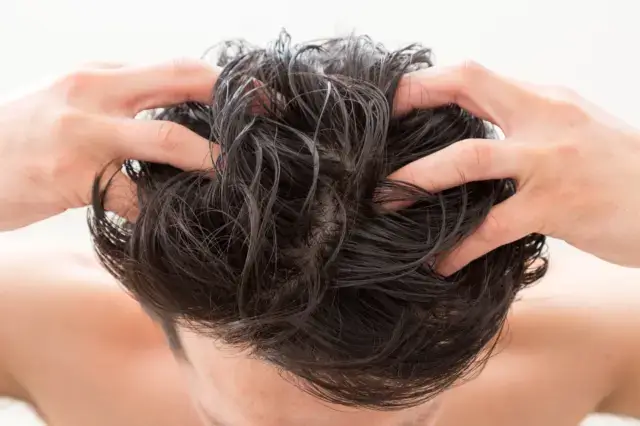
The purpose of a hair growth massage is to promote blood circulation in the scalp; however, it cannot fundamentally treat AGA. The goal of a hair growth massage is to stimulate blood circulation and create an environment that ensures a steady supply of nutrients to the hair follicles.
Performing a hair growth massage incorrectly can actually worsen the condition of your scalp. Therefore, the correct method for a hair growth massage is outlined below.
- Massage your shoulders and neck.
- Use your thumb, index finger, middle finger, and ring finger to press behind your ear (on the side of your head).
- Using the pads of your fingers pressed against the back of your ear (temporal region), massage in a clockwise circular motion.
- Place your index, middle, and ring fingers on the sides of your head and push upward toward the crown of your head.
- Massage your scalp as if you were pushing the entire scalp toward the crown of your head.
It’s best to follow the steps above (①–⑤) in order, about twice a day, for about 5 minutes each time.
The carotid arteries run through the neck. When performing a hair growth massage, be sure to start by massaging the neck and shoulders, where these major blood vessels are located.
Massaging the neck and shoulders first helps ensure that sufficient blood is delivered to the scalp.
It’s a good idea to incorporate the hair growth massage into your evening shampoo routine. You can also do the massage after taking a bath.
Benefits of hair growth massages
Below are the benefits you can expect from a hair growth massage.
- Blood circulation-boosting effects
- Relaxing effects
- Face-slimming effect
- Preventing age spots and wrinkles
It is said that hair growth massages, by promoting blood circulation, also help regulate lymphatic flow, so they are believed to offer anti-aging benefits such as a slimmer-looking face and the prevention of age spots and wrinkles. However, since hair growth massages are not medical treatments, if you want to completely remove age spots or wrinkles, you will need to undergo treatment at a cosmetic surgery clinic or similar facility.
It is important to note that the purpose of hair growth massages is to promote blood circulation in the scalp, and they are not medical treatments.
3 Risks of Incorrect Scalp Massage
“It would be one thing if it were simply ineffective, but there’s nothing more heartbreaking than discovering that it was actually making your hair loss worse.” Scalp massages, which you continue to do with the best of intentions, can actually damage your scalp and hair—and backfire—depending on how you do them.
Causes scalp inflammation and dandruff
Are you perhaps massaging your scalp too vigorously, thinking, “I want this to really work”? However, the scalp is more delicate than you might think. Massaging with too much force or using your fingernails can cause countless tiny scratches on the scalp.
If bacteria enter through these scratches, it can lead to scalp problems such as inflammation, acne, and itching.
Furthermore, excessive friction can weaken the scalp’s protective barrier, leading to dryness and, in some cases, dandruff. Massaging with unwashed hands is another factor that can worsen the condition of your scalp.
Damages weak hair follicles and increases hair loss
Hair weakened by AGA is in a state where it falls out very easily. If you massage it vigorously, you may end up pulling out even hair that is still growing and shouldn’t have fallen out yet.
If you notice an increase in hair loss after starting a massage, this is not a sign of improved blood circulation. It may simply be that the physical force of the massage is causing the hair to fall out.
In particular, vigorous massage while your hair is wet—such as during shampooing—should be avoided, as the cuticles are open at that time, and this puts significant strain on the hair and hair follicles.
It damages the hair itself, leading to breakage and split ends
Not only the scalp, but the hair itself can also be damaged by the friction caused by massage.
The surface of the hair is protected by a hard layer called the cuticle. However, if you continue to massage vigorously, the cuticle can peel off or become damaged.
When the cuticle is damaged, moisture and proteins inside the hair leak out, causing the hair to lose its bounce and body and become dry and brittle. As a result, this leads to an increase in “split ends”—where the hair breaks easily even with minimal force—and “frayed ends,” where the tips split, which can make the hair appear thinner overall.
Conclusion
In this article, we’ve addressed the pressing question: “Is scalp massage necessary for AGA?”
To summarize the key points:
- Since scalp massage does not affect the hormone (DHT) that is the root cause of AGA, it cannot stop the progression of hair loss.
- Incorrect massage techniques can damage the scalp and hair follicles, risking adverse effects such as increased hair loss.
The efforts you’ve made so far have by no means been in vain. However, directing those efforts in the right direction can make a huge difference in the results.
When it comes to concerns about thinning hair, the quickest path to a solution is to consult a specialist rather than trying to deal with it on your own.
Why not start by getting a free consultation to accurately assess the condition of your scalp? This will be the wisest and surest first step toward putting an end to days spent being swayed by unreliable information and regaining a future filled with confidence.
Frequently Asked Questions
- Is a scalp massage completely pointless, aside from its relaxing effects?
While you shouldn’t expect it to stop the progression of AGA, it’s not entirely pointless. When performed correctly—using the pads of your fingers with gentle pressure that feels comfortable—massage can relieve tension in the scalp and provide a relaxing effect.
Since stress can have a negative impact on hair health, it’s a good idea to incorporate massage as a way to refresh yourself. However, it’s important to understand that this is not a “treatment” but rather a supplementary form of “care.”
- Once I start AGA treatment, do I have to continue it indefinitely?
Since AGA is a progressive form of hair loss, there is a high likelihood that hair thinning will resume once you stop taking the medication. To maintain the treatment’s effectiveness, you’ll need to continue taking the medication. However, the goal of treatment varies from person to person. You can flexibly decide on your treatment plan—such as aiming to reduce your dosage or maintain your current condition once you’re satisfied with a certain level of improvement—in consultation with your doctor.
It’s important to first consult a specialist and develop a treatment plan that aligns with your personal goals and life plans.