
What Age Should You Start AGA Treatment? A Doctor Explains the Best Time to Begin and Why Early Treatment Matters

Many people are concerned about thinning hair but may be unsure about what age is appropriate to start AGA treatment.
Recently, there has been an increase in the number of young men in their early 20s experiencing thinning hair.
In addition, the incidence of FAGA (diffuse alopecia)—the female counterpart to AGA—also appears to be rising among younger age groups.
The question here is when to consult an AGA treatment clinic.
Thinning hair conditions such as AGA and FAGA are characterized by gradual progression, and by the time people realize they are experiencing hair loss, it is often already quite advanced.
Therefore, in this article, I would like to discuss the criteria for deciding whether to seek treatment for thinning hair and the best time to consult an AGA treatment clinic.
- Is “I’m Still Fine” the Most Dangerous Mindset? The Real Reason You Should Start AGA Treatment
- AGA is a progressive form of hair loss that does not resolve on its own
- Is your thinning hair a sign of AGA? A self-check list
- Characteristics of alopecia areata
- When Is the Best Time to Start AGA Treatment?
- If you’re 20 or older and have been diagnosed with AGA, you should start treatment as soon as possible.
- Why is early treatment absolutely beneficial?
- For teens (ages 18 and 19) struggling with thinning hair
- Goals and strategies for AGA treatment by age group
- AGA Treatment: A Strategy of Defense and Offense
- Defensive treatment: Blocks the cause of hair loss (DHT)
- Offensive treatment: Promotes hair growth and stimulates new hair growth
- How Much Does It Cost? Is It Covered by Insurance? A Comprehensive Guide to the Financial Aspects of AGA Treatment
- AGA treatment is a private medical service and is not covered by health insurance.
- Breakdown of AGA Treatment Costs
- [Important] Generic drugs: A smart way to keep medical costs down
- How to Choose the Right AGA Clinic and the Process of Getting Treated
- Expertise and track record
- Quality and transparency in counseling
- Convenience and a wide range of options
- Here’s what to expect during your first visit
- Conclusion
Is “I’m Still Fine” the Most Dangerous Mindset? The Real Reason You Should Start AGA Treatment

“I’m young, so it’ll probably go away eventually.” “If I improve my lifestyle, I should be able to get back to normal.” We fully understand the temptation to turn a blind eye to the signs of thinning hair when you think this way. However, if the cause is AGA (androgenetic alopecia), that mindset could lead to serious regret down the road.
This is because AGA is a progressive form of hair loss that is fundamentally different from ordinary hair loss.
AGA is a progressive form of hair loss that does not resolve on its own
AGA is not simply hair loss caused by the natural aging process or temporary health issues. It is a medical condition caused by DHT (dihydrotestosterone), a type of male hormone, which disrupts the hair growth cycle.
Healthy hair goes through a growth phase—during which it grows thicker and longer over several years—before transitioning to a resting phase, during which it naturally falls out. However, when AGA develops, the growth phase is drastically shortened by the effects of DHT.
Since the hair falls out before it has had a chance to grow fully, the number of thin, short hairs gradually increases, and the scalp becomes visible.
Most importantly, once AGA develops, it does not resolve on its own; unless treated, the symptoms will continue to progress slowly but surely.
Is your thinning hair a sign of AGA? A self-check list
Is your hair loss temporary, or could it be a sign of AGA? Let’s start by assessing your condition. The more of the following items that apply to you, the more likely it is that you have AGA.
- Nature of hair loss: I’ve noticed an increase in fine, short strands of hair falling out compared to before.
- Areas of thinning hair: My hair has started thinning at the hairline on my forehead (especially the M-shaped area) and on the top of my head (around the crown).
- Changes in hair texture: My hair has lost its overall bounce and body, and I feel like it has lost volume.
- Family: There is a relative on either the father’s or mother’s side who has thinning hair.
- Progression: Hair loss or thinning has persisted or worsened over a period of several months or more.
On the other hand, if hair loss is evenly distributed across the entire scalp, appears in circular patterns, or began suddenly following a specific stressor or illness, it may be caused by a condition other than AGA. A consultation with a specialist is essential for an accurate diagnosis.
AGA is believed to be caused by an increase in dihydrotestosterone (DHT), a harmful male hormone. Levels of DHT tend to rise due to alcohol consumption, smoking, and unhealthy lifestyle habits.
Characteristics of alopecia areata
Like AGA, alopecia areata is one of the hair loss conditions that can affect anyone. It is said that alopecia areata can develop in anyone, regardless of race or gender.
Alopecia areata is thought to be caused by an autoimmune disorder triggered by stress.
Alopecia areata can range from the single-lesion type—where thinning hair the size of a 10-yen coin appears in one spot on the scalp—to the multiple-lesion type or the serpiginous type, as the condition worsens. We recommend consulting an AGA treatment clinic when symptoms of the single-lesion type first appear.
If the condition worsens to the serpiginous type, treatment will take longer. By consulting an AGA treatment clinic during the early, single-lesion stage, you can also have your daily stress levels assessed.
It is best to seek advice for alopecia areata as early as possible.
When Is the Best Time to Start AGA Treatment?

We’ll provide a detailed explanation from a specialist’s perspective on the optimal timing for starting treatment.
If you’re 20 or older and have been diagnosed with AGA, you should start treatment as soon as possible.
The best time to start AGA treatment is very simple: “As soon as possible, provided you have been diagnosed with AGA by a specialist and are at least 20 years old.”
Rather than your age itself, the most important thing is to take action as soon as AGA symptoms are confirmed.
At many clinics in Japan, oral medications for androgenetic alopecia (AGA), such as finasteride and dutasteride, are generally prescribed only to adult men aged 20 and older. This is because the clinical trials conducted in Japan to confirm the safety of these drugs were performed on men aged 20 and older.
While these medications may be prescribed to individuals aged 18 and older in other countries, it is standard practice in Japan to prioritize safety in accordance with domestic guidelines.
Why is early treatment absolutely beneficial?
There is a clear reason why we consistently emphasize that “early treatment is crucial” when it comes to AGA treatment. It comes down to the hair follicles.
Hair follicles are the organs that produce hair. As AGA progresses, these follicles gradually shrink and eventually cease functioning entirely.
It is extremely difficult to reactivate hair follicles that have stopped functioning using medication. In other words, the longer you delay starting treatment, the fewer hairs can be restored.
For people in their 20s and 30s, hair follicles are usually still active. If you begin treatment while your hair is still healthy, you can halt the progression of AGA and expect highly effective hair regrowth.
Conversely, putting off treatment is tantamount to narrowing your own chances of recovery in the future. If you value cost-effectiveness, you should be aware that the choice to “do nothing” could end up being the most expensive option in the long run.
For teens (ages 18 and 19) struggling with thinning hair
So, does that mean people under 20 can’t do anything? Absolutely not. Some people suffer from early-onset alopecia, a condition in which hair thinning begins in the late teens.
While prescribing oral medications requires caution for this age group, the following treatment options are available with a doctor’s diagnosis and parental consent.
- Use of topical minoxidil (a topical medication) to promote blood circulation in the scalp
- Injection therapy (Mesotherapy)
- Lifestyle guidance to prevent hair loss from worsening
Don’t give up—it’s important to start by consulting a specialized clinic.
Goals and strategies for AGA treatment by age group
While AGA treatment can be started at any age, the goals and strategies will vary slightly depending on when you begin treatment. Consider your age and try to envision what your future might look like.
| Age | Main Treatment Objectives | Recommended Treatment Strategies (Examples) |
|---|---|---|
| 20s | Prevention and early intervention | Use oral medications (such as finasteride) to reliably halt hair loss, while actively promoting hair regrowth with topical medications (such as minoxidil) as needed. At the same time, make lifestyle changes. |
| 30s and 40s | Hair loss prevention and active hair regrowth | The basic approach is to use oral and topical medications together. If hair loss is progressing, combine this with injection therapy (mesotherapy) to enhance hair regrowth. |
| 50 and older | Maintaining the status quo and improving quality of life | The top priority is to halt the progression of the condition. Opt for treatments that focus on topical medications or safer treatment options. If hair follicles have been lost, hair transplantation is also an option. |
As this table shows, starting treatment in your 20s puts you in the most advantageous position—allowing for prevention before any loss occurs and maximizing improvement.
While treatment is possible even as you get older, if you’re aiming for the best possible results, we strongly recommend that you see a specialist as soon as possible.
AGA Treatment: A Strategy of Defense and Offense
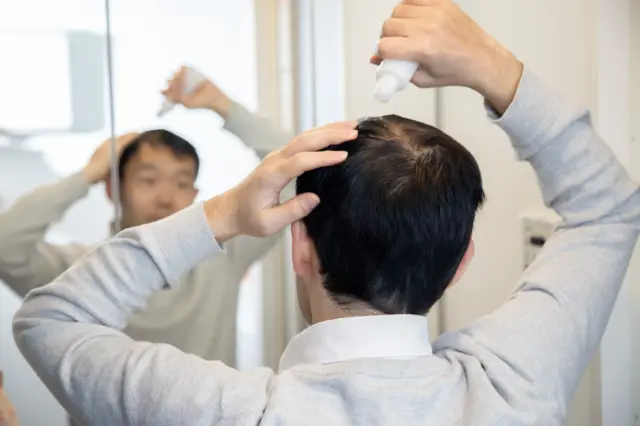
When you hear the term “AGA treatment,” it may seem complicated and difficult. However, the basic approach is built on two pillars: defensive treatment and offensive treatment.
Once you understand these two concepts, you’ll clearly grasp the rationale behind the treatment plan your doctor proposes, allowing you to proceed with confidence.
Defensive treatment: Blocks the cause of hair loss (DHT)
The root cause of AGA is that DHT (dihydrotestosterone), a type of male hormone, acts on the hair follicles and inhibits hair growth. Therefore, suppressing the production of DHT is the foundation of AGA treatment and serves as a defensive strategy.
This role is fulfilled by two oral medications—finasteride and dutasteride—which are classified as 5α-reductase inhibitors. They inhibit the activity of the enzyme 5α-reductase, thereby suppressing the production of DHT.
| Ingredient Name | Exemplary Product Names | Features・Positioning | Strength of Effect · Selection Criteria |
| Finasteride | Propecia |
|
First, here are the medications that will serve as the foundation for starting treatment |
| Dutasteride | Zagallo |
|
Next steps when finasteride is not effective enough |
Taking these hair care supplements helps slow down disruptions in the hair growth cycle, reduce hair loss, and prevent hair from falling out.
Offensive treatment: Promotes hair growth and stimulates new hair growth
Once you’ve stopped hair loss with preventive treatment, the next step is to use a proactive treatment to thicken your thinned hair and promote new hair growth. The key ingredient in this process is minoxidil.
Although it was originally developed as a medication to lower blood pressure, it was later discovered to promote hair growth, leading to its use as a treatment for AGA. It promotes hair growth by dilating blood vessels in the scalp to improve blood flow, thereby facilitating the delivery of nutrients to the hair matrix cells in the hair follicles.
It is available as a topical medication applied directly to the scalp and as an oral medication (minoxidil tablets) that works from within the body.
In many AGA treatments, combining this “defensive” approach (finasteride, etc.) with the “offensive” approach (minoxidil) aims to achieve the highest treatment efficacy by stopping hair loss while actively promoting hair regrowth.
How Much Does It Cost? Is It Covered by Insurance? A Comprehensive Guide to the Financial Aspects of AGA Treatment

When starting AGA treatment, cost is probably one of the biggest concerns, right alongside effectiveness. From a breakdown of the costs to smart ways to keep expenses down, we’ll answer all your financial questions with complete transparency.
AGA treatment is a private medical service and is not covered by health insurance.
The first important thing to know is that AGA treatment is considered a cosmetic procedure and is therefore a private medical service not covered by health insurance. This applies equally to both specialized clinics and general dermatology practices.
Therefore, you will be responsible for all consultation and medication costs. With that in mind, let’s take a look at the specific costs.
Breakdown of AGA Treatment Costs
The cost of AGA treatment can be broadly divided into initial costs and ongoing (monthly) costs.
Initial Costs
| Items | Estimated costs | Overview and Objectives |
| Consultation and counseling fees | Free to a few thousand yen | Medical examinations by doctors and counseling sessions with professional counselors. Many clinics now offer these services free of charge. |
| Test fees (blood tests, etc.) | Free to about 10,000 yen | This test is performed to determine whether your physical condition (such as liver function) allows you to take or use the medication safely. |
Ongoing expenses
While this varies significantly depending on the type of treatment, the general guidelines are as follows.
| Treatment plan | Estimated monthly costs | Main treatment approaches (Defensive and Offensive) |
|
Preventing Hair Loss |
Approximately 4,000 to 8,000 yen | A basic plan that uses only oral medications, such as finasteride, to maintain the current condition and prevent hair loss |
|
Hair regrowth promotion |
Approximately 10,000 to 20,000 yen | A treatment plan for advanced hair loss that combines finasteride and other medications to prevent hair loss with minoxidil, which actively promotes hair growth and thickens hair |
[Important] Generic drugs: A smart way to keep medical costs down
It’s only natural to want to reduce your monthly expenses, even if just a little. That’s why it’s important to know about generic drugs.
Generic drugs are medications manufactured and sold by other pharmaceutical companies using the same active ingredient after the patent on the brand-name drug (new drug) has expired. Because development costs are lower, they are priced lower than brand-name drugs while offering nearly equivalent efficacy and safety.
As you can see, simply choosing generic drugs can significantly reduce your monthly out-of-pocket costs. For people in their 20s and 30s who prioritize value for money, this is a very sensible choice.
How to Choose the Right AGA Clinic and the Process of Getting Treated

Once you understand the importance of AGA treatment and have put your concerns about costs and side effects to rest, the next step is to choose a clinic. Here, we’ll explain in detail the key points to consider when selecting a clinic and the process of getting treatment, so you can take that first step with confidence.
Expertise and track record
AGA is a field that requires specialized knowledge. Don’t just choose any dermatology or cosmetic clinic—select one that specializes in AGA treatment and has a proven track record of successful treatments.
Specialized clinics have accumulated the latest insights and a wealth of case data.
Quality and transparency in counseling
Your first consultation is an excellent opportunity to get a sense of the clinic’s approach. Make sure they listen carefully to what you have to say and thoroughly examine the condition of your scalp using a microscope. Also, check to see if they clearly explain your treatment options, the pros and cons of each, and a detailed breakdown of the costs.
You can trust a clinic that doesn’t pressure you into making a decision and gives you time to think things through at your own pace.
Convenience and a wide range of options
Consistency is key in AGA treatment. While factors such as location and office hours—which make it physically convenient to visit—are certainly important, in recent years, an increasing number of clinics, including ours, have begun offering online consultations.
Online medical consultations—which allow even busy people or those who are hesitant about in-person visits to easily see a specialist from the comfort of their own homes—are a very convenient option for people in their 20s and 30s.
Here’s what to expect during your first visit
To help ease any anxiety you may have about what to expect during your first visit to the clinic, here’s a brief overview of the process for new patients at our clinic.
- Reservations:
- Initial consultation and counseling (Free):A professional counselor will carefully listen to your hair concerns, lifestyle habits, and treatment preferences.
- Scalp check (Free)
- Medical examination by a doctor (Free):Based on a medical interview and an examination of the scalp, a doctor will diagnose the stage of AGA.
- Proposed treatment plan
Everything up to this point is free. If you are not satisfied with our recommendations, we will not pressure you into undergoing treatment.
Please feel free to visit us, even if your only goal is to “accurately assess the condition of your hair.” That first step could make a big difference in your future.
Conclusion
In this article, we’ve provided a detailed explanation from a specialist’s perspective, focusing on the question, “At what age should you start AGA treatment?”
Finally, let me reiterate the most important point.
- Don’t ignore hair loss in your 20s. If it’s AGA, it won’t go away on its own, and if left untreated, it will definitely get worse.
- The sooner treatment begins, the better. Starting treatment while the hair follicles are still healthy is the most effective and cost-efficient strategy.
- Modern AGA treatments are safe and effective. Under the supervision of a specialist, if you fully understand the risks of side effects and make use of generic medications and other options, you can continue treatment with peace of mind.
Why not put an end to spending all that time worrying alone? Take the first step toward regaining your self-confidence and breaking free from a daily routine where you sigh every time you look in the mirror.
We’ll do everything we can to support you in taking that courageous step. Start by sharing your concerns with us during a free counseling session.
Let’s work together with our experts to find the best solution for you.
Frequently Asked Questions
- Wouldn't an over-the-counter hair growth treatment work instead of the medication prescribed by the clinic?
Their purposes differ. Many over-the-counter hair growth products are classified as “quasi-drugs,” and their primary purpose is to improve the scalp environment and keep existing hair healthy. While they can be expected to help prevent dandruff and itching, they are not recognized as having any direct effect on correcting the disruption of the hair growth cycle—the root cause of AGA.
On the other hand, prescription medications (hair regrowth treatments) such as finasteride and minoxidil, which are dispensed at clinics, are pharmaceuticals whose effectiveness in promoting hair growth and inhibiting hair loss has been scientifically proven. If you are serious about treating AGA, the use of medically proven treatments is essential.